


TL;DR:
- Vinyl siding lasts between 20 and 40 years depending on thickness, installation, climate, and maintenance. Premium panels in thicker ranges offer the longest lifespan, especially when installed correctly and maintained regularly. Poor installation and high UV exposure significantly reduce siding durability and can require earlier replacement.
Vinyl siding is defined as a PVC-based exterior cladding rated for a lifespan of 20–40 years under normal residential conditions. Premium panels last 40–50 years, while builder-grade material often falls short of 20. The gap between those two outcomes comes down to four variables: panel thickness, installation quality, climate exposure, and how consistently you maintain the surface. Get all four right, and vinyl siding delivers decades of low-maintenance protection. Get even one wrong, and you could be replacing it far sooner than you planned.
How long does vinyl siding last on a typical home?
Mid-grade vinyl siding lasts 20–40 years, with 30 years as the most realistic planning figure for most homeowners. That range is wide because panel thickness drives a significant portion of the outcome. Builder-grade panels at .040 inches thick typically reach 15–20 years. Premium panels in the .046–.055 inch range regularly hit 40–50 years, largely because they carry UV inhibitors and better impact resistance built into the material.
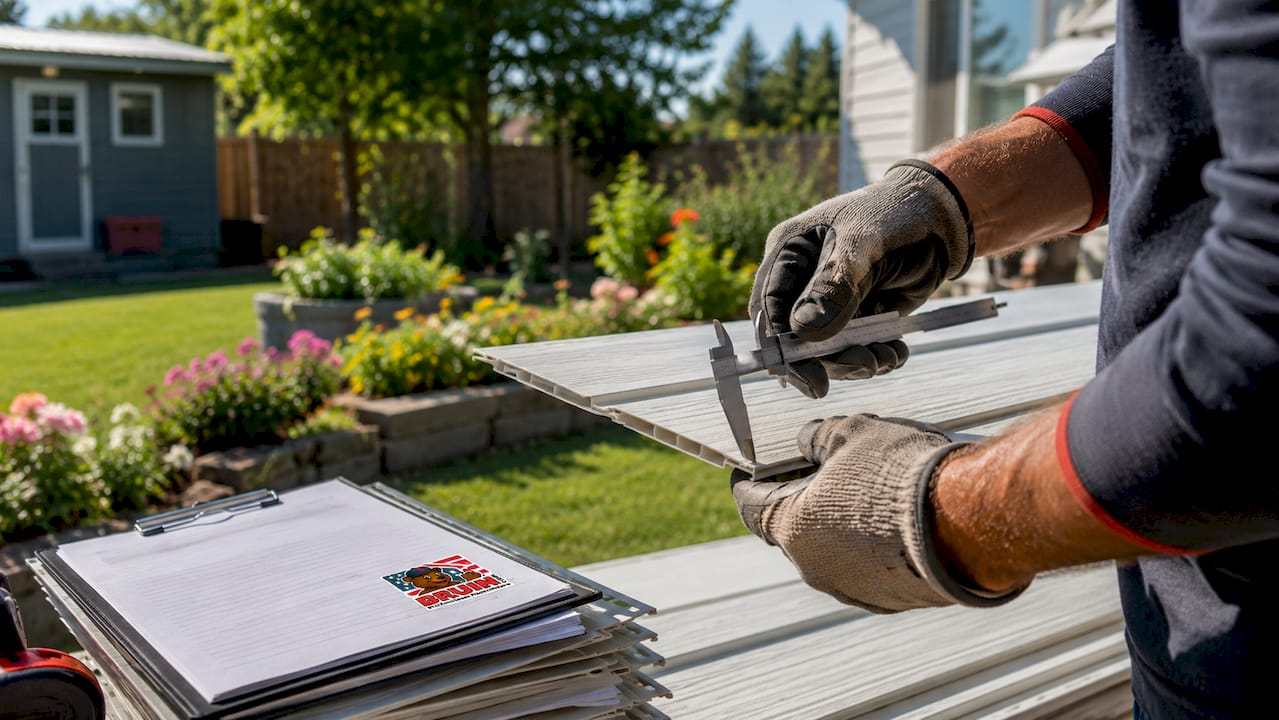
Panel thickness is the single easiest quality indicator you can check before buying. Test panel quality by flexing a loose sample: if it bends like a credit card, it is builder grade. Stiffer panels that resist flex are premium grade and worth the price difference over a 30-year ownership horizon.
Climate also sets a hard ceiling on vinyl siding longevity. Extreme temperature swings and high UV exposure can cut lifespan to 15–20 years, while milder climates support 30–40 years. Homeowners in New England, where Bruin Corp of Attleboro operates, face cold winters, humid summers, and significant UV load. That combination makes panel quality and installation precision especially important.
What determines how long vinyl siding lasts on your home?
Several factors work together to set the actual service life of your siding. Understanding each one helps you make better decisions at purchase, installation, and during routine upkeep.
Panel quality and thickness
The clearest predictor of vinyl siding longevity is panel thickness. Builder-grade panels at .040 inches are common in new construction because they keep costs low. Premium panels at .046–.055 inches cost more upfront but deliver measurably longer service life. The UV inhibitors in premium panels slow color degradation, and the added mass resists cracking from impact or temperature stress.
Color choice and heat absorption
Color selection affects more than curb appeal. Dark-colored vinyl absorbs more heat and degrades faster than lighter colors by 5–10 years on average. Dark panels reach higher surface temperatures on sunny days, which accelerates material breakdown over time. Lighter colors like white, cream, or light gray reflect more heat and hold their integrity longer.
Pro Tip: If you prefer a darker exterior color, ask your installer about premium-grade panels specifically rated for high heat environments. The material formulation matters more than the color alone.
Climate and UV exposure
UV radiation is the primary cause of fading and surface brittleness in vinyl siding. Homes in high-sun regions or those with south-facing walls take the hardest UV hit. Temperature cycling, where panels expand in summer heat and contract in winter cold, also stresses fasteners and seams over time. Consistent freeze-thaw cycles in northern climates accelerate this process.
Maintenance frequency
Annual inspection and gentle cleaning extends siding life by over a decade compared to neglected homes. Dirt, mold, and mildew hold moisture against the surface and degrade the material faster. Consistent care is not a large time investment, but the payoff in added years is significant.
How does installation affect vinyl siding lifespan?
Poor installation can shorten vinyl siding lifespan by 30–50% regardless of panel grade. This is the most underestimated factor homeowners face. A premium panel installed incorrectly will fail faster than a mid-grade panel installed by a skilled crew.
The most common installation error is nailing too tightly. Panels nailed too tightly restrict thermal expansion, causing warping and buckling within 5–10 years. Vinyl expands and contracts with temperature changes, and the fastening system must allow that movement. Expert installers hang panels loosely and center nails on the nailing slots, not at the edges.
The five installation practices that most directly affect lifespan are:
- Loose nailing technique. Fasteners should sit centered in the nailing slot with a small gap, never driven flush against the panel face.
- Proper flashing at all penetrations. Windows, doors, and utility entries need correctly installed flashing to prevent water infiltration behind the siding.
- Moisture barrier installation. A continuous house wrap beneath the siding blocks wind-driven rain and reduces thermal bridging.
- Correct overlap and locking. Panels must lock fully into each other at the correct depth to prevent wind uplift and water entry.
- Expansion gaps at corners and trim. Panels need room to move at every termination point, including J-channels, corner posts, and window trim.
Pro Tip: Before hiring an installer, ask specifically how they handle thermal expansion. Any experienced crew will immediately describe their loose-nailing approach. If they look uncertain, keep looking.
One less obvious risk comes from nearby windows. Low-E windows can focus sunlight onto adjacent siding, creating localized heat spots that melt or warp panels. If your home has or will have Low-E glazing, discuss this with your installer before the siding goes up. For a detailed look at what professional installation involves, Bruin Corp of Attleboro’s guide on vinyl siding installation steps covers the process from start to finish.
How to maintain vinyl siding to maximize its lifespan
Maintenance is the variable most homeowners control directly, and it has a larger impact on vinyl siding longevity than most people expect.
- Clean annually with a garden hose and soft brush. Vinegar-water solutions kill up to 82% of mold species, making them an effective and safe cleaning option. Work from top to bottom to avoid streaking.
- Avoid pressure washing. Pressure washing forces water behind panels, which can rot the wall sheathing beneath and void your warranty. A standard garden hose with moderate pressure is all you need.
- Keep gutters clean and functional. Clogged gutters cause moisture buildup behind siding, promoting mildew growth and premature decay of the wall sheathing. Gutter maintenance is a direct part of siding longevity management.
- Inspect caulking around windows and doors each spring. Cracked or missing caulk is the most common entry point for water. Replacing it costs almost nothing and prevents expensive structural repairs.
- Repair loose or cracked panels promptly. A single loose panel allows wind and water to work behind the entire run. Catching it early is far cheaper than replacing a section.
- Trim vegetation away from the siding surface. Shrubs and vines hold moisture against the panels and can physically scratch or crack the surface over time.
The key principle is that maintenance should be routine, not reactive. Waiting until you see visible damage means the problem has already progressed further than the surface shows.
When does vinyl siding need to be replaced?
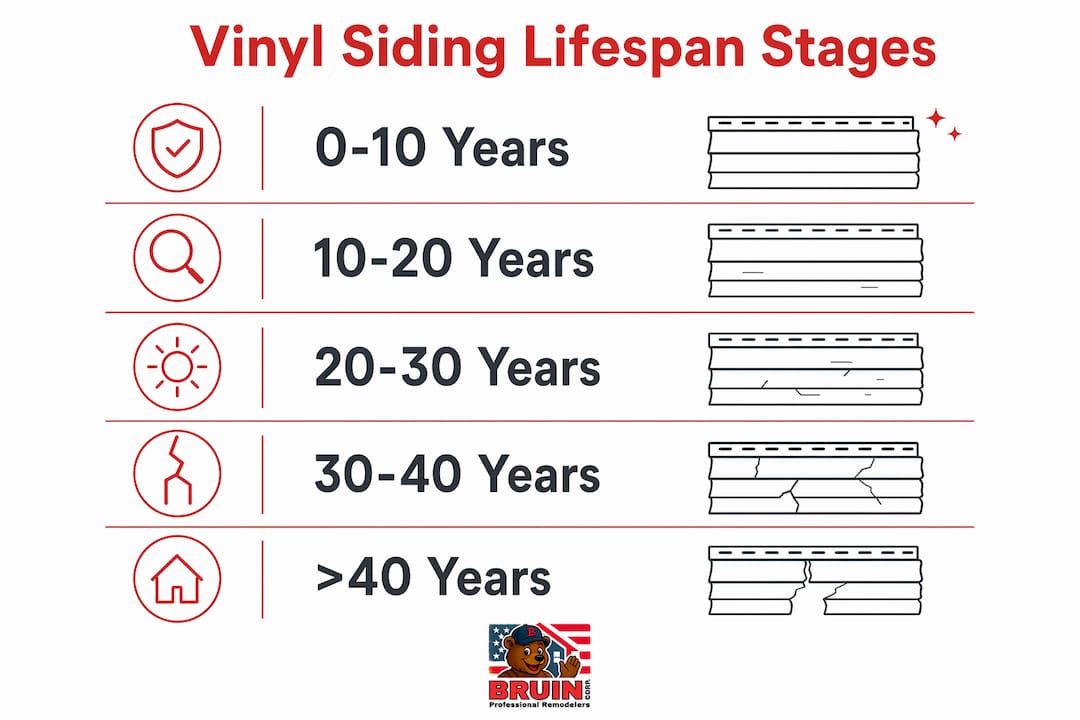
Vinyl siding follows a predictable aging pattern. Knowing what to expect at each stage helps you plan ahead rather than react to a crisis.
| Age range | Typical condition | Action recommended |
|---|---|---|
| 0–10 years | Minimal wear, color stable | Annual cleaning only |
| 10–15 years | Minor fading, possible caulk gaps | Inspect caulking, clean regularly |
| 15–20 years | Fading, possible loose panels | Professional inspection advised |
| 20–30 years | Cracking, brittleness, warping possible | Assess full replacement |
| 30+ years | Structural risk if neglected | Replace and upgrade panel grade |
The most telling signs that replacement is overdue include panels that crack when touched, widespread warping that no longer lies flat, and visible moisture staining on interior walls near the siding line. Brittleness is especially significant because it means the UV inhibitors in the material have been fully depleted. At that point, no amount of cleaning or patching restores structural integrity.
Proactive care starting at the 15-year mark can extend total lifespan by 10–15 years compared to homes where maintenance is skipped. Early intervention is almost always more cost-effective than emergency replacement. Choosing the right siding material and color from the start also reduces how quickly you reach that replacement threshold.
Key Takeaways
Vinyl siding lasts 20–40 years, but panel thickness, installation quality, climate, and consistent maintenance determine where your homelands in that range.
| Point | Details |
|---|---|
| Panel thickness drives lifespan | Premium panels (.046–.055") last up to 50 years; builder-grade (.040") averages 15–20 years. |
| Installation quality is critical | Poor nailing and missing flashing can cut lifespan by 30–50% regardless of panel grade. |
| Avoid pressure washing | Forced water behind panels rots wall sheathing and voids warranties; use a garden hose instead. |
| Inspect at 15–20 years | Proactive assessment at this stage can add 10–15 years to total siding service life. |
| Color affects degradation rate | Dark-colored vinyl degrades 5–10 years faster than light colors due to higher heat absorption. |
What I’ve learned after watching hundreds of siding projects
Most homeowners focus almost entirely on color and price when choosing vinyl siding. Those are the wrong two variables to lead with. After seeing the results of hundreds of exterior projects, the pattern is consistent: the homes with siding that still looks sharp at 25 years almost always had two things in common. They used premium-grade panels, and they had a skilled crew install them correctly.
The maintenance piece is real, but it is not complicated. An annual wash and a quick walk-around inspection each spring takes less than two hours. What surprises most homeowners is how much that small habit compounds over time. A home that gets that treatment consistently will look and perform noticeably better at the 20-year mark than one that was cleaned only when it looked dirty.
The one thing I would push back on is the idea that vinyl siding is “maintenance-free.” That phrase gets used a lot in marketing, and it creates unrealistic expectations. Vinyl does not rot or need painting, which is a genuine advantage. But it still needs cleaning, caulk checks, and prompt attention to loose panels. “Low maintenance” is accurate. “No maintenance” is not.
If you are in a climate with hard winters and humid summers, like much of Massachusetts and Rhode Island, invest in the thicker panels. The price difference between builder grade and premium is real, but it is small compared to the cost of replacing siding 10 years earlier than you should have to.
— Jess
Bruin Corp of Attleboro: expert vinyl siding installation in MA and RI
Bruin Corp of Attleboro has completed over 11,000 exterior projects across Massachusetts and Rhode Island, with vinyl siding installation as a core specialty. The team installs premium vinyl siding using proper loose-nailing technique, continuous moisture barriers, and correct flashing at every penetration point. Those practices directly translate into longer siding life and fewer costly repairs down the road.
Whether you are installing new siding, assessing aging panels, or planning a full exterior upgrade, Bruin Corp of Attleboro offers financing options and a track record built on quality craftsmanship. Contact the team at bruincorp.com to schedule a consultation and get an honest assessment of your home’s exterior.
FAQ
How long does vinyl siding last on average?
Mid-grade vinyl siding averages 20–40 years, with 30 years as the standard planning figure. Premium panels in the .046–.055 inch range can reach 40–50 years with proper care.
Does vinyl siding fade over time?
Yes, all vinyl siding fades gradually due to UV exposure. Dark colors fade and degrade faster, losing up to 5–10 years of service life compared to lighter shades.
What shortens vinyl siding lifespan the most?
Poor installation is the leading cause of early failure. Nailing panels too tightly prevents thermal expansion and causes warping within 5–10 years, regardless of panel quality.
How do I know when to replace my vinyl siding?
Replace siding when panels crack on contact, warp visibly, or when you see moisture staining on interior walls. A professional inspection at the 15–20 year mark helps you catch problems before they become structural.
Is pressure washing safe for vinyl siding?
Pressure washing is not recommended. High-pressure water forces moisture behind panels, which rots the wall sheathing and can void your warranty. A garden hose with a soft brush is the correct cleaning method.
Recommended
- The 1 Most Important Thing to Remember When Installing Vinyl Siding – Bruin Corporation of Attleboro
- How Vinyl Siding Is Installed: A Step-by-Step Guide
- Maintenance-Free Vinyl Siding | Only At Bruin Corp
- Siding Says it All – Tricks to Choose the Right Material and Color for Your House – Bruin Corporation of Attleboro