


TL;DR:
- Coordinating windows and doors as a unified design system improves curb appeal, energy efficiency, and home value.
- Selecting consistent frame color, material, and hardware across all openings ensures a polished and intentional exterior.
- Upgrading windows and doors together maximizes insulation, reduces thermal bridges, and results in better building envelope performance.
Coordinating windows and doors for exterior style means treating every opening on your home’s facade as part of one unified design system. Homeowners who take this approach see perceived home value rise 20–30% compared to piecemeal replacements, and they gain measurable energy savings on top of the visual payoff. The industry term for this practice is “building envelope coordination,” and it covers frame color, material, hardware finish, grid pattern, and thermal performance across all windows and doors at once. Get these elements right together, and your home looks like it was designed by an architect rather than assembled over decades.
How to coordinate windows, doors, and exterior style through color, material, and hardware
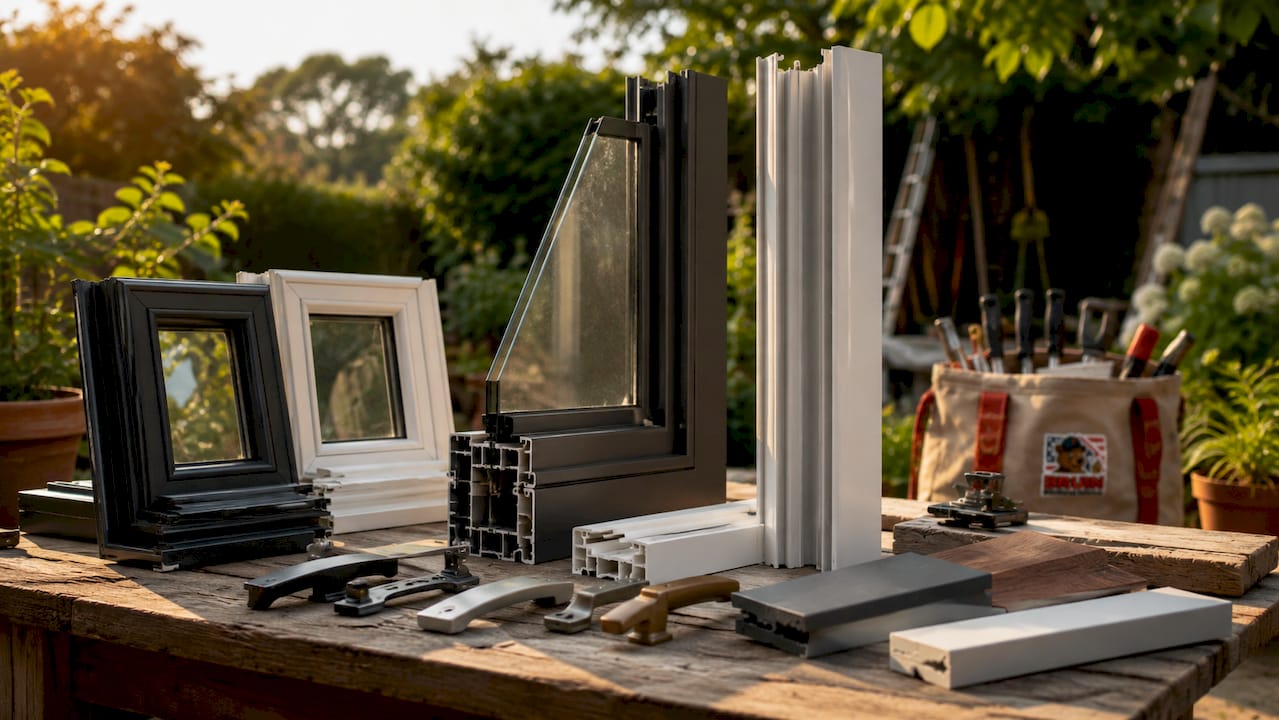
The single most effective design move you can make is selecting one frame color and applying it to every window and door on your home. Unified design palettes across frames, doors, and hardware create a designer-level exterior that reads as intentional and polished. Mixing frame colors, even subtly, signals a home assembled in stages rather than planned as a whole.
Popular frame colors and their best pairings with common exterior materials:
- White frames pair with brick, cedar shake, and light-colored vinyl siding for a classic, clean look.
- Bronze or dark brown frames complement stone veneers, wood siding, and earth-toned stucco.
- Black frames work with modern fiber cement siding, gray brick, and board-and-batten exteriors.
- Tan or clay frames blend naturally with beige or cream siding and traditional colonial architecture.
Frame material matters as much as color. Vinyl, fiberglass, and aluminum each age differently. Vinyl softens slightly over decades in direct sun, while fiberglass holds its finish longer. Mixing frame materials across windows and doors creates visible inconsistencies within five to ten years, even when the initial colors match. The safest approach is to order from the same manufacturer or product family for every opening. Mixed brands often differ noticeably in gloss and texture, even when color names are identical on paper.
Hardware finish ties the whole look together at close range. Design experts recommend selecting one hardware finish, such as brushed nickel, oil-rubbed bronze, or matte black, and applying it to every lock, handle, hinge, and kick plate across windows and doors. Inconsistent hardware finishes are the detail that separates a truly polished exterior from one that almost works.
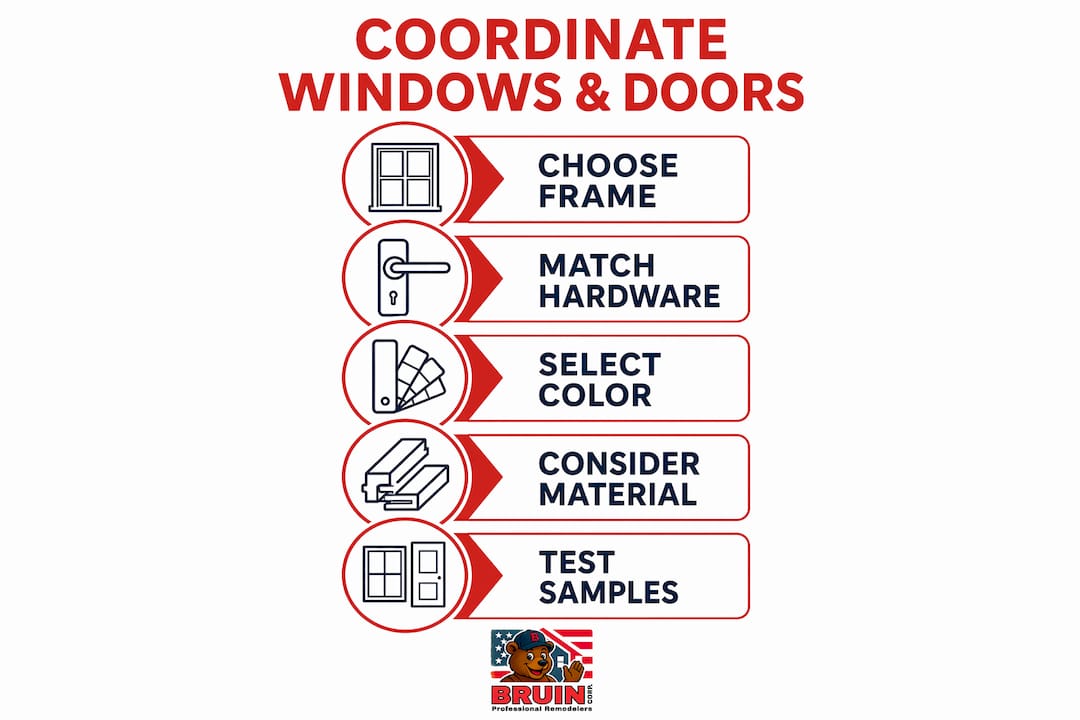
Pro Tip: Request physical color and material samples from your supplier, then hold them side by side outdoors in natural light at different times of day. Manufacturer color names vary widely, and what looks like a match under showroom lighting can read as two different colors on your home’s facade.
Do door styles need to match window profiles?
Door style and window profile do not need to be identical, but they must speak the same architectural language. A Craftsman home with divided-light double-hung windows looks best with a front door that carries matching grid lines or a similar wood-tone finish. A modern home with clean-lined casement windows calls for a flush or minimally detailed door, not a panel door with ornate molding.
Follow these steps to align your door and window designs:
- Identify your home’s architectural style. Colonial, Craftsman, farmhouse, and contemporary each have established window and door profiles that read as native to the style.
- Match grid patterns where glass appears. If your windows carry a six-over-six divided light pattern, carry that grid into any door glass panels or sidelights.
- Choose a door color strategy. Neutral window frames paired with a bold front door create a strong architectural focal point. Navy, ruby red, and forest green work well against white or bronze frames.
- Align arched elements. Arched windows call for arched door tops or at minimum a curved transom above the entry. Mixing arched windows with a flat-topped door creates visual tension that reads as an error.
- Address patio doors separately but consistently. Patio doors are less visible from the street, but their frame color and material must still match the window system. A mismatched patio door frame is immediately obvious from the backyard and from interior sight lines.
The front entry door is the one place where contrast is not just acceptable but encouraged. A bold door color draws the eye to the entry, creates a focal point, and gives the home personality. The key is keeping window frames neutral so the door reads as a deliberate accent rather than a clash.
How do coordinated window and door upgrades improve energy efficiency?
Up to 70% of home energy can be lost through poorly insulated windows and doors. That figure explains why aesthetic coordination and energy performance belong in the same conversation. Upgrading both at once captures savings that a single-product replacement leaves on the table.
The key energy features to coordinate across windows and doors:
| Upgrade type | Energy benefit |
|---|---|
| Low-E glass coatings | Reduces heat transfer through glass by reflecting infrared radiation |
| Insulated door cores | Cuts conductive heat loss through the door panel itself |
| Storm doors | Saves 12–33% on utility costs when added over an entry door |
| Insulated shutters | Reduces energy loss by up to 20% compared to non-insulated options |
| Thermal window framing | Carries insulation continuously across head, jamb, and sill to eliminate cold spots |
Structural thermal framing aligns window and door openings with wall insulation, eliminating thermal bridging at every rough opening. Thermal bridging is what happens when a gap in insulation creates a direct path for heat to escape. It is invisible from the outside but shows up immediately on your utility bill.
Replacing windows and doors simultaneously vastly improves building envelope air sealing compared to doing them years apart. Each piecemeal replacement leaves the adjacent opening as the weak link. When you upgrade all openings at once, the contractor can seal and insulate the entire envelope as a continuous system.
Pro Tip: Ask your contractor to verify that window and door rough openings are insulated with the same material and R-value as the surrounding wall cavity. Mismatched insulation at the perimeter of an opening creates a thermal bridge even when the window or door itself is high-performance.
The energy-efficient window benefits extend well beyond lower utility bills. Consistent interior temperatures, reduced condensation, and less UV fading on furniture and flooring are direct results of a properly coordinated upgrade.
What are the most common mistakes when matching exterior windows and doors?
Most homeowners make at least one of these mistakes when they attempt to coordinate their exterior openings without a unified plan.
- Buying from multiple manufacturers. Even when color names match on paper, different brands produce frames with different gloss levels, undertones, and aging rates. The mismatch becomes obvious within two to three years.
- Skipping natural light verification. Color samples approved under showroom lighting frequently look wrong on the actual facade. Always verify samples outdoors at multiple times of day before ordering.
- Replacing windows and doors in separate projects. Piecemeal replacement leaves thermal bridges and draft points at every untouched opening. It also makes color and material matching far harder when the second phase arrives years later.
- Using inconsistent hardware finishes. Mixing brushed nickel on windows with oil-rubbed bronze on doors is the kind of detail that visitors notice without being able to name. It reads as unfinished.
- Treating each opening as an independent decision. The most common and most costly mistake is selecting windows and doors without a whole-facade plan. Every opening should be specified against the same color, material, and hardware standard before a single order is placed.
A whole-home project replacing 12–15 windows plus entry and patio doors costs $8,000–$30,000 and delivers a 20–30% increase in perceived home value. That return depends entirely on the coordination being executed correctly. A mismatched result at that price point is an expensive lesson in the cost of skipping the planning stage.
Working with a contractor who offers design consultation before the order phase is the most reliable way to avoid these pitfalls. Bruin Corp of Attleboro provides exactly that kind of pre-project coordination for homeowners across Massachusetts and Rhode Island, with over 11,000 completed projects behind their recommendations.
Key Takeaways
Treating every window and door as part of one exterior design system is the single most effective way to boost both curb appeal and energy performance simultaneously.
| Point | Details |
|---|---|
| Unify frame color and material | Select one color and material family across all windows and doors before ordering anything. |
| Match door style to window profile | Align grid patterns, architectural language, and arched elements for a cohesive look. |
| Upgrade windows and doors together | Simultaneous replacement eliminates thermal bridges and maximizes air sealing across the building envelope. |
| Verify samples in natural light | Always check physical color and material samples outdoors before finalizing your order. |
| Coordinate hardware finishes | Apply one hardware finish to every lock, handle, and hinge across all openings. |
Why I think most homeowners underestimate this project
After seeing hundreds of exterior renovation projects, the pattern is clear. Homeowners spend weeks agonizing over front door color and almost no time thinking about whether that door’s frame material will still match their windows in fifteen years. The visual drama of a bold entry door is real, but it fades fast when the frames around it start aging at different rates.
The detail that consistently separates a great exterior from a good one is hardware finish. A single brushed bronze handle on every window and door costs almost nothing extra at the order stage. It reads as deliberate and expensive to anyone standing on the sidewalk. Skipping it because “nobody notices handles” is the kind of shortcut that haunts a renovation.
Budget phasing is a real constraint for most homeowners, and I respect that. But if you must phase the project, at minimum order all frames from the same manufacturer and lock in the color before the first phase ships. Trying to match a color two years later from a different production run is a gamble you will almost certainly lose.
The energy efficiency case for doing everything at once is equally strong. The continuous insulation alignment that thermal framing delivers only works when every opening is treated as part of the same system. One old, drafty door in a house full of new windows is like a hole in a boat. The new windows do their job perfectly, and that one door undoes a meaningful portion of the gain.
Work with a contractor who will walk your facade with you before the design is finalized. The best ones catch things you would never notice, like a window that sits in a shadow zone where a dark frame will look black instead of bronze, or a door placement where the hardware will catch direct afternoon sun and oxidize faster than the rest.
— Jess
Bruin Corp of Attleboro: coordinated exterior upgrades done right
Bruin Corp of Attleboro has spent over 40 years helping Massachusetts and Rhode Island homeowners get window and door coordination right the first time. Their team handles everything from frame color selection to simultaneous installation of entry doors, patio doors, and full window systems, all managed as one project to protect your building envelope and your design vision.
If you are planning a coordinated exterior upgrade, the homeowner’s 2026 window guide from Bruin Corp of Attleboro is the clearest starting point available. Their door replacement services cover entry, patio, and storm doors with the same attention to material and finish consistency that makes the difference between a good renovation and a great one. With financing options and a track record of over 11,000 completed projects, Bruin Corp of Attleboro is built for exactly this kind of whole-home exterior work.
FAQ
What does it mean to coordinate windows and doors for exterior style?
Coordinating windows and doors for exterior style means selecting unified frame color, material, hardware finish, and grid pattern across every opening on your home’s facade. The goal is a building envelope that reads as one intentional design rather than a collection of separate purchases.
Should windows and doors be replaced at the same time?
Replacing windows and doors simultaneously improves building envelope air sealing far more than piecemeal replacements and eliminates thermal bridging at every opening. It also makes color and material matching far more reliable.
How much can coordinated window and door upgrades save on energy costs?
Upgrading to high-quality insulated windows and doors can save 12–33% on utility costs, and adding insulated shutters reduces energy loss by up to 20% compared to non-insulated options.
Do window and door frames need to come from the same manufacturer?
Ordering from the same manufacturer or product family is the most reliable way to guarantee matching color, gloss, texture, and aging behavior. Mixed brands frequently differ in visible ways within a few years even when color names appear identical.
What is the best way to choose a front door color that works with my windows?
Neutral window frames paired with a bold contrasting front door color, such as navy, ruby red, or forest green, create a strong architectural focal point without clashing. Keep the window frame color consistent across the facade so the door reads as a deliberate accent.