


TL;DR:
- Window frames influence installation time, energy efficiency, and the home’s final appearance. Proper flashing, shimming, and selecting the right frame material are essential for durability and performance. Using pre-hung frames and managing moisture correctly reduces long-term costs and prevents damage.
Window frames are the structural backbone of every window installation, controlling fit, thermal performance, moisture management, and final appearance. The role of window frames in installation goes far beyond holding glass in place. Frames determine how long installation takes, how much heat escapes through your walls, and whether water finds its way into your home over the next decade. Choosing the wrong frame material or skipping a single flashing step can cost far more than the window itself. This guide gives homeowners and contractors the evidence-backed detail needed to get it right the first time.
How do window frames affect installation efficiency and labor costs?
Frame type is the single biggest variable in how long a window installation takes. Pre-hung factory-assembled frames typically take 1–2 hours per window to install, while site-built frames require 3–5 hours. That time difference compounds fast across a full house replacement. Labor costs follow the same pattern: pre-hung installs run $65–$150 per window, while site-built frames can push $150–$300 or more.
Dimensional consistency is the reason pre-hung frames win on efficiency. Factory-built frames arrive square, plumb, and ready to drop into a prepared rough opening. Site-built frames require on-site measuring, cutting, and fitting, which introduces human error at every step. One out-of-square frame can cause sash binding, air gaps, and callbacks that eat up the labor savings from a lower material cost.
The window frame installation process also affects how much disruption a homeowner experiences. A pre-hung install on a single window can be completed in a morning. A site-built frame on the same opening might take a full day, including drying time for sealants and trim work. For contractors managing multiple jobs, that difference determines whether a project stays on schedule.
- Pre-hung frames reduce callbacks by arriving factory-squared and dimensionally consistent.
- Site-built frames offer flexibility for non-standard openings but require more skilled labor.
- Dimensional inconsistency in site-built frames is the leading cause of sash operation failures.
- Labor cost savings from pre-hung frames are most significant on projects with five or more windows.
Pro Tip: Choose pre-hung frames whenever the rough opening is standard-sized. The upfront cost difference is small, and the reduction in callbacks and adjustment time pays for itself on the first job.
What is the impact of window frames on energy efficiency and thermal performance?
Window frames make up 10%–30% of total window surface area, which means the frame material directly determines how much heat escapes through your wall. That percentage is large enough that even a triple-pane glass unit loses its thermal advantage if the frame conducts heat freely. This is the concept of thermal bridging: heat travels through the path of least resistance, and a poorly insulated frame is that path.
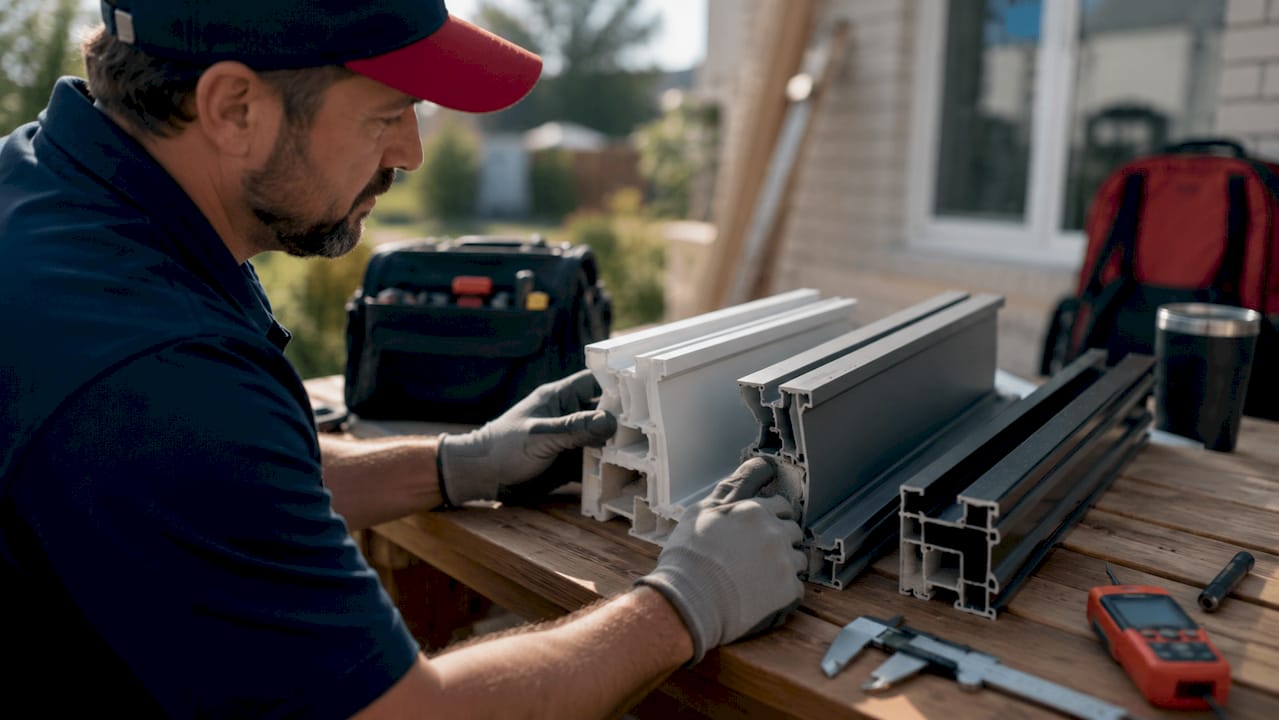
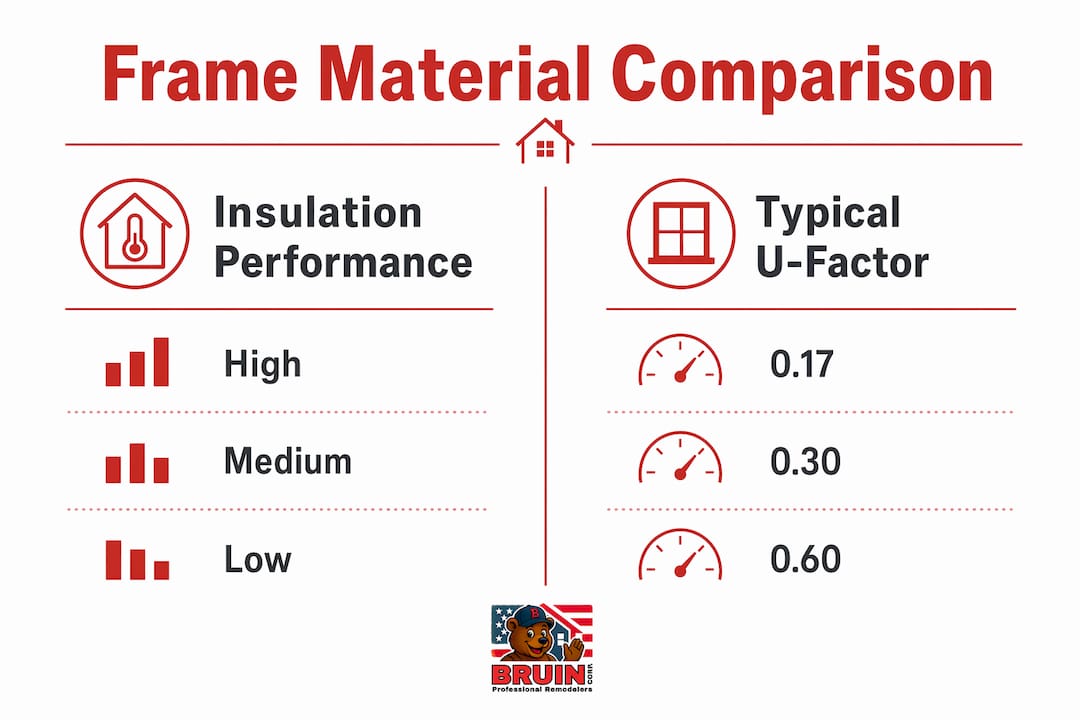
Frame material determines insulation performance more than any other single factor. Aluminum frames conduct heat rapidly and perform poorly in cold climates without a thermal break. Vinyl and fiberglass frames trap air within their hollow chambers, slowing heat transfer significantly. High-performance vinyl frames carry U-factors between 0.20 and 0.30, which meets or exceeds Energy Star requirements in most U.S. climate zones. The lower the U-factor, the better the insulation.
Poor frame-to-wall sealing compounds the problem. Window performance depends as much on airtight frame installation as on glazing quality. A poorly sealed frame can double heat loss even when the glass itself is high-performing. That means the benefits of energy-efficient windows only materialize when the frame is installed with the same care as the glass is selected.
| Frame material | Insulation performance | Typical U-factor | Best climate use |
|---|---|---|---|
| Aluminum (no thermal break) | Poor | 0.50–1.00+ | Mild climates only |
| Aluminum (with thermal break) | Moderate | 0.35–0.55 | Mixed climates |
| Vinyl | Good | 0.20–0.35 | Cold and mixed climates |
| Fiberglass | Excellent | 0.20–0.30 | All climates |
| Wood | Good | 0.25–0.40 | Cold climates |
Fiberglass frames hold a specific advantage that vinyl does not: fiberglass expands and contracts at nearly the same rate as glass. That means the seal between frame and glazing stays intact through temperature extremes. Vinyl frames require careful shimming to handle thermal movement without distorting, which is a detail that matters most in Massachusetts and Rhode Island winters.
What are best practices in window frame installation to manage moisture and ensure durability?
Moisture is the most destructive force acting on a window installation, and the frame is the first line of defense. Flashing must follow a shingle-lap pattern, installed from the bottom up, so each layer overlaps the one below it. Skipping or reversing this sequence creates a water channel that directs rain directly into the wall cavity. The damage from that mistake typically takes 3–7 years to surface visibly, by which point mold and rot are already established.
Shimming is equally critical and equally underestimated. Spending an extra 5–10 minutes shimming precisely can prevent an eight-hour correction later. Vinyl frames in particular require shims placed at corners and spaced to allow for thermal expansion. A frame that is shimmed too tightly will bow when temperatures rise, causing the sash to bind or the seal to crack.
Moisture management failures in window installation mainly stem from incorrect flashing at the sill. The sill pan is the most vulnerable point because gravity pulls water toward it. A properly installed sill pan flashing, sloped to drain outward, stops water before it reaches the framing. Without it, even a well-sealed frame will eventually fail.
- Install sill pan flashing first, sloped outward, before setting the frame.
- Apply head flashing last, overlapping the side flashing in shingle-lap order.
- Use hand-driven fasteners on nail fins. High-pressure nail guns damage nailing flanges, creating gaps that void manufacturer warranties.
- Shim vinyl frames at corners and every 16 inches along the sides to manage expansion.
- Seal the interior perimeter with low-expansion foam, not standard expanding foam, which can bow the frame.
Pro Tip: Before setting any frame, check the rough opening for moisture with a pin-type moisture meter. Installing over a wet substrate is the most common cause of insert installation failures that appear years later.
How do different installation methods influence remodel complexity and aesthetics?
The choice between full-frame replacement and insert installation shapes every other decision in a window remodel. Full-frame installation is required when existing frames are rotted, structurally compromised, or when the rough opening needs re-flashing. Full-frame removal exposes the entire rough opening, allowing inspection of framing members, sill plates, and insulation. That visibility is the method’s greatest advantage: problems that would stay hidden under an insert become fixable before the new window goes in.
Insert installation, also called a pocket install, fits a new window unit into the existing frame without removing interior or exterior trim. The process is faster and less disruptive, which makes it attractive for occupied homes. The limitation is significant: insert installation carries long-term hidden risks of rot and water damage that may take 3–7 years to surface. If the existing frame has any moisture damage, the new window will fail prematurely.
| Factor | Full-frame replacement | Insert installation |
|---|---|---|
| Disruption level | High (interior and exterior work) | Low (minimal trim disturbance) |
| Cost | Higher | Lower |
| Framing inspection | Full access | No access |
| Glass area | Maximized with new frame | Slightly reduced |
| Flashing quality | Full re-flash possible | Limited to existing conditions |
| Best use case | Rotted or damaged frames | Sound, dry existing frames |
Aesthetics follow the method chosen. Full-frame replacement allows the installer to select trim profiles, brick molding, and exterior casing that match or update the home’s style. Properly installed frames and trim integrate windows with the wall surface, closing expansion gaps and creating a finished appearance. Insert installs preserve existing trim, which is an advantage when the original woodwork is ornate or historically significant, but limits the ability to update the window’s visual profile.
For remodeling projects in Massachusetts and Rhode Island, where older homes often have wood frames with decades of paint and moisture exposure, full-frame replacement is the safer choice. The added cost of full-frame work is almost always less than the cost of repairing hidden rot discovered after an insert install fails.
Key takeaways
The frame is not a passive border around the glass. It determines installation time, energy loss, moisture protection, and the finished look of every window in a home.
| Point | Details |
|---|---|
| Frame type drives labor cost | Pre-hung frames take 1–2 hours vs. 3–5 hours for site-built, cutting labor costs significantly. |
| Frames control thermal bridging | Frames cover 10%–30% of window surface; vinyl and fiberglass frames with U-factors of 0.20–0.30 minimize heat loss. |
| Shimming prevents callbacks | Precise shim placement at corners and 16-inch intervals stops frame bowing and sash failures in vinyl windows. |
| Flashing sequence is non-negotiable | Bottom-up shingle-lap flashing at the sill pan is the only method that reliably stops water intrusion. |
| Method choice affects inspection access | Full-frame replacement exposes hidden rot and framing damage; insert installs cannot detect problems until they worsen. |
What I’ve learned from watching frame installations go wrong
After years of watching window projects succeed and fail, the pattern is clear: the glass almost never causes the problem. The frame does. Specifically, it is the details that installers skip when they are rushing. A shimming step skipped to save ten minutes. A nail gun used on a nail fin because it is faster than hand-driving. Sill pan flashing installed flat instead of sloped. Each of those shortcuts looks fine on day one and becomes a $3,000 repair by year five.
The homeowners who get the best long-term results are the ones who ask their contractor two questions before the job starts: “How are you shimming the frames?” and “What is your flashing sequence?” A contractor who answers those questions with specifics knows what they are doing. A contractor who says “we follow standard practice” may not.
The other thing I have seen consistently is that homeowners undervalue the frame material decision. They spend hours comparing glass packages and U-factors for the glazing, then accept whatever frame the installer recommends without question. The frame’s U-factor matters just as much. A fiberglass frame with a U-factor of 0.22 paired with a mid-grade double-pane unit will outperform an aluminum-framed triple-pane unit in a cold climate. That is a counterintuitive result that most homeowners never hear.
Invest in the frame. Insist on the shimming. Verify the flashing. Those three things determine whether your window installation lasts 10 years or 30.
— Jess
Bruin Corp of Attleboro: precision window installation for Massachusetts and Rhode Island homes
Bruin Corp of Attleboro has completed over 11,000 home exterior projects across Massachusetts and Rhode Island, with window installation as a core specialty. Every installation follows the shimming, flashing, and frame-selection standards described in this article, backed by more than 40 years of field experience.
Whether you need a full-frame replacement on a home with aging wood frames or an insert install on sound existing openings, Bruin Corp of Attleboro brings the technical detail that protects your investment. The team handles energy-efficient window selection and precision installation as a single, coordinated service. For homeowners ready to move forward, Bruin Corp of Attleboro’s full services cover windows, doors, siding, roofing, and insulation with financing options available.
FAQ
What is the role of window frames in installation?
Window frames provide structural support, seal the gap between the window unit and the rough opening, and determine thermal and moisture performance. They also set the final appearance of the window within the wall.
How do frame materials affect energy efficiency?
Vinyl and fiberglass frames outperform aluminum by trapping air in hollow chambers, reducing thermal bridging. High-performance vinyl and fiberglass frames carry U-factors between 0.20 and 0.30, meeting Energy Star standards in most U.S. climate zones.
When should I choose full-frame replacement over insert installation?
Full-frame replacement is required when existing frames show rot, moisture damage, or structural compromise. Insert installation is valid only over sound, dry frames with no signs of water intrusion.
Why does shimming matter so much for vinyl window frames?
Vinyl expands and contracts with temperature changes. Shims placed at corners and spaced along the frame sides allow that movement without causing the frame to bow, which prevents sash binding and seal failure.
What flashing mistake causes the most water damage?
Installing sill pan flashing flat rather than sloped outward is the most common error. Water pools at a flat sill pan and eventually penetrates the wall cavity, causing mold and rot that may not appear for 3–7 years.