


An insert window replacement is defined as installing a new window unit directly inside an existing window frame, leaving the original frame, trim, and siding completely intact. Also called a pocket replacement, this method upgrades the sash, glass, and hardware without touching the surrounding structure. It costs 20–35% less than a full-frame replacement and takes roughly 30–45 minutes per window. For homeowners who want better performance without a major renovation, it is the most practical starting point.
What is an insert window replacement and how does it work?
An insert window replacement works by removing only the existing sashes and hardware, then fitting a new pre-built window unit into the original frame opening. The frame itself stays in place. This means no drywall repair, no exterior siding disturbance, and no interior trim removal. The sash, hardware, and glass are all that get replaced.
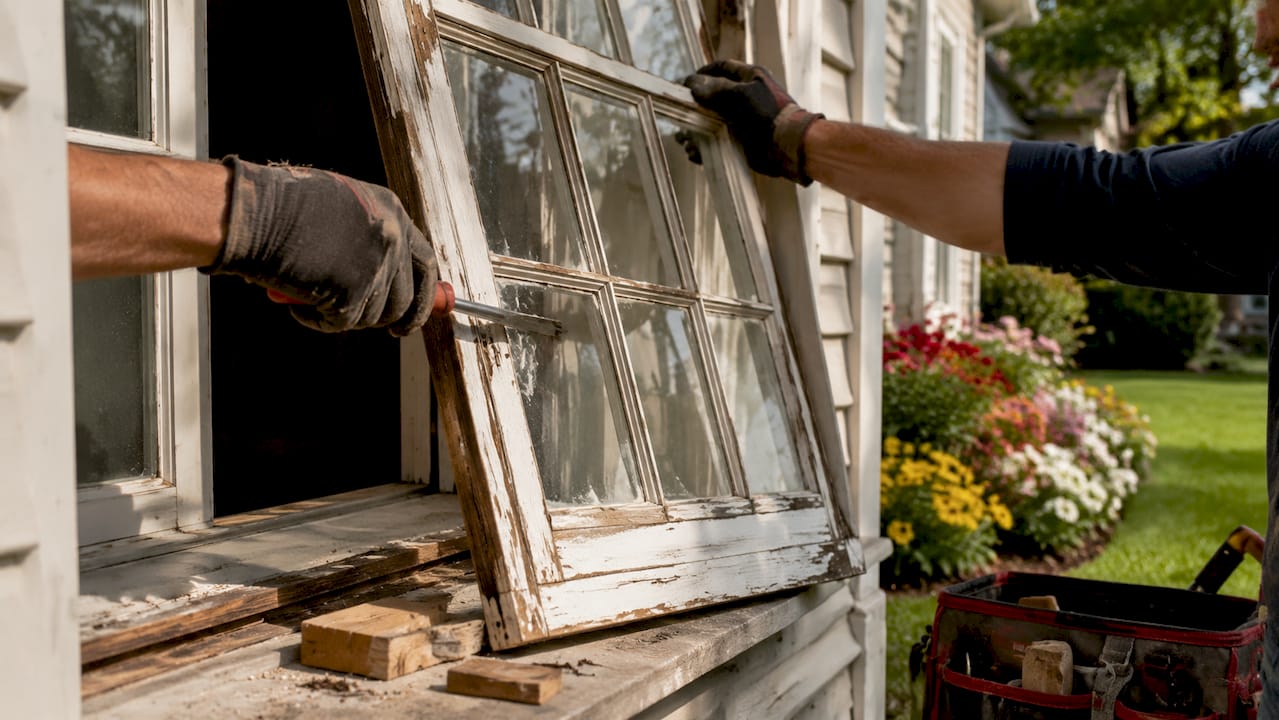
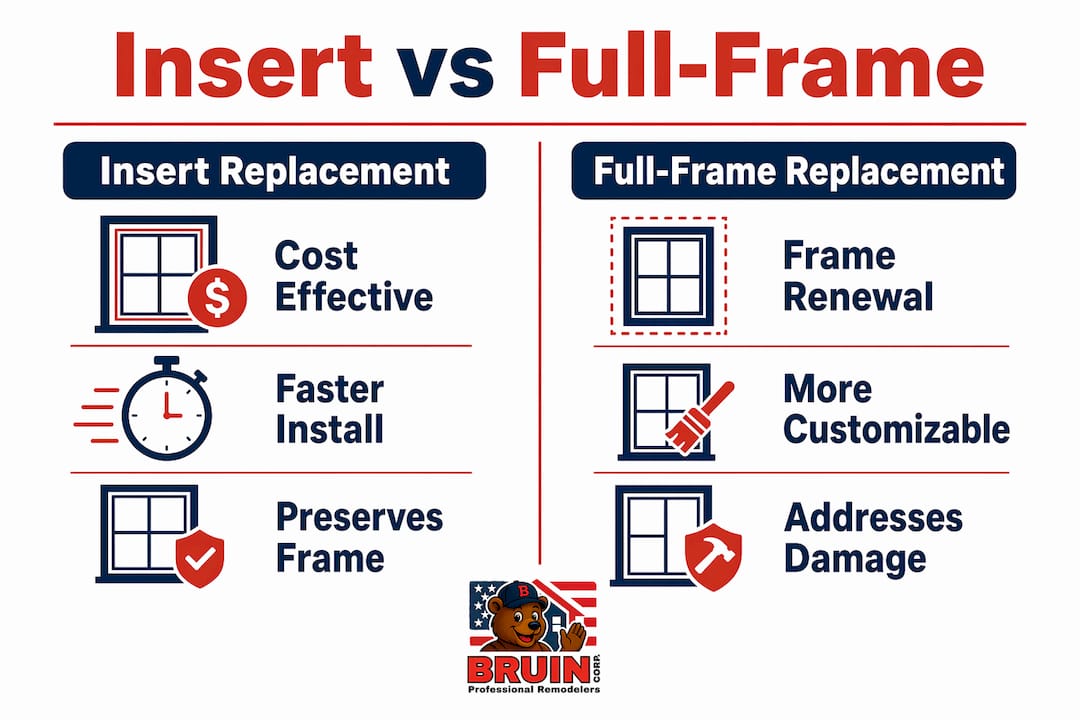
The industry also calls this method a “retrofit replacement.” Both terms describe the same process. The key distinction from a full-frame replacement is structural. Full-frame replacement removes everything down to the rough opening, including the frame, trim, and sometimes the surrounding wall material. Insert replacement is a surgical, non-invasive upgrade focused on performance when the existing frame is in good condition.
This approach suits homeowners who want updated glass technology, better weatherstripping, or a fresh look without the cost and disruption of a full renovation. If your frames are solid, square, and dry, an insert replacement delivers most of the performance gains at a fraction of the total project cost.
What are the benefits and limitations of insert window replacement?
Insert replacements offer clear advantages for the right home. The most significant is cost. At $300–$700 per window, they run 20–35% less than full-frame options. On a 12-window project, that gap can mean $3,000–$5,000 in total savings.
Key insert window replacement benefits include:
- Faster installation. Each window takes roughly 30–45 minutes, compared to 3–4 times longer for full-frame work.
- Less disruption. No siding removal, no drywall patching, and no interior trim damage.
- Lower labor costs. Less time on site means lower overall labor charges.
- Improved energy performance. New double or triple-pane glass with low-E coatings significantly reduces heat transfer. Learn more about energy-efficient window benefits to understand the long-term savings.
- Preserved curb appeal. Existing exterior trim stays in place, so the home’s appearance changes minimally.
The limitations are equally real. Insert windows must conform to the existing frame shape and dimensions. You cannot resize the opening or switch from a double-hung style to a casement without a full-frame replacement. The new unit will also be slightly smaller than the original glass area, since it fits inside the old frame.
The most serious limitation is frame condition. If the existing frame has rot, warping, or water damage, an insert replacement can trap moisture inside, leading to mold and structural failure. This is not a minor risk. A frame that looks solid from the inside may still hide water damage behind the casing.
Pro Tip: Before committing to an insert replacement, press a screwdriver gently into the bottom corners of the frame. Soft or spongy wood is a sign of rot that disqualifies the frame for this method.
How is the insert window replacement installed?
Installation quality determines whether an insert window performs well for 20 years or fails within five. The process follows a clear sequence, and each step has a specific failure point if rushed.
- Remove the existing sashes. Both the upper and lower sashes come out first. This exposes the frame interior and allows a full inspection for rot, moisture, or damage.
- Measure the frame precisely. Take multiple measurements at the top, middle, and bottom widths, plus both diagonals. Frames out of square by more than 1/4 inch cannot accommodate an insert without problems. Use a dedicated window measurement guide to avoid ordering the wrong size.
- Order the insert unit. The new window is built to fit the measured opening. Most manufacturers subtract a small amount from the measured dimensions to allow for shimming and adjustment.
- Prepare the frame. Clean out old weatherstripping, debris, and any loose paint. Check for moisture and address it before the new unit goes in.
- Set and shim the insert. Place the new unit into the frame opening. Use shims at the sill, sides, and head to achieve level and plumb alignment. Check all four corners with a level before securing.
- Fasten and seal. Drive screws through the frame into the existing structure. Apply a bead of quality exterior caulk around the perimeter. For the gap between the insert and the old frame, use only low-expansion foam labeled specifically for windows and doors.
- Test operation. Open and close the window fully before finishing. Check that the sash locks engage cleanly and that no binding occurs.
Pro Tip: Never use standard high-expansion spray foam during installation. It generates enough pressure to bow the new frame, causing operational failure and seal loss. Only use foam specifically labeled for windows and doors.
Water management is the step most homeowners underestimate. Poor sealing at the sill allows water to collect behind the frame, where it cannot dry out. Review window installation best practices before starting any project. Insert replacement looks straightforward, but expert water management separates a lasting result from a costly callback.
What customization options exist with insert window replacements?
Insert windows offer meaningful customization within a defined set of boundaries. Understanding those boundaries upfront prevents disappointment during the planning stage.
What you can customize:
- Glass packages. Choose from double-pane, triple-pane, low-E coatings, argon gas fills, or impact-resistant glass depending on your climate and budget.
- Frame materials. Vinyl, fiberglass, and aluminum-clad options are widely available. Each material has different maintenance requirements and thermal performance profiles.
- Hardware finishes. Locks, lifts, and tilt latches come in standard finishes including white, bronze, and brushed nickel.
- Interior and exterior colors. Most manufacturers offer a range of factory-applied colors and wood-grain foil wraps for the interior face.
- Grille patterns. Simulated divided lights, colonial grilles, and prairie patterns can be added between the panes.
What you cannot change:
Insert windows must fit within existing frame dimensions, which rules out resizing the opening or changing the window’s shape. Switching from a double-hung window to a casement or awning style is generally not possible with an insert. The rough opening stays fixed. If your remodeling goals include larger windows, a bay configuration, or a completely different style, a full-frame replacement is the correct path.
This is not a flaw in the insert method. It is simply a reflection of what the method is designed to do. For homeowners replacing aging windows in a structurally sound home, the available customization is more than enough to achieve a fresh, high-performing result.
What is the cost comparison between insert and full-frame window replacements?
Cost is the most common reason homeowners choose insert over full-frame replacement. The difference is significant at every scale.
| Factor | Insert replacement | Full-frame replacement |
|---|---|---|
| Average cost per window | $300–$700 | $600–$1,500 |
| Installation time per window | 30–45 minutes | 2–3 hours |
| Siding or trim disturbance | None | Yes, often required |
| Drywall repair needed | No | Frequently yes |
| Frame condition required | Sound, square, dry | Any condition |
| Best for | Performance upgrades | Structural restoration |
On a 12-window whole-house project, insert replacement can save $3,000–$5,000 compared to full-frame work. That gap grows when you factor in the labor time difference. Full-frame installation requires demolition, new flashing, and finishing work on both the interior and exterior. Insert work skips all of that.
Hidden costs can close the gap, however. If a frame inspection reveals rot or water damage after the project starts, the job must convert to full-frame replacement. That mid-project switch costs more than planning for full-frame from the start. A thorough frame inspection before ordering windows prevents this scenario. Homeowners who are unsure about their frame condition should get a professional assessment before committing to either method.
When should homeowners choose insert versus full-frame replacement?
The decision comes down to frame condition and remodeling goals. Insert replacement is the right choice when specific criteria are met.
Choose insert replacement when:
- The existing frame is structurally sound with no soft spots, rot, or visible water staining.
- The frame is square within 1/4 inch across all diagonal measurements.
- You are not changing the window size, shape, or operating style.
- The exterior siding and interior trim are in good condition and worth preserving.
- Budget is a primary consideration and the frame qualifies.
Choose full-frame replacement when:
- The frame shows rot, warping, or any sign of water infiltration.
- You want to resize the opening or change the window style entirely.
- The existing frame is more than 30 years old and has never been inspected.
- Energy audits reveal air leakage around the frame itself, not just the glass.
- You are replacing windows as part of a larger exterior renovation that includes new siding.
Choosing insert replacement on a compromised frame is the single most common mistake in window projects. Trapping damaged frames inside a new window unit accelerates structural failure and creates conditions for mold growth. The cost savings disappear quickly when remediation becomes necessary. When in doubt, a professional inspection takes less than an hour and removes all guesswork from the decision.
Bruin Corp of Attleboro can help with your window replacement project
Choosing between insert and full-frame replacement is straightforward once you know your frame condition and remodeling goals. Getting that assessment right from the start is where professional guidance pays off.

Bruin Corp of Attleboro has completed over 11,000 home exterior projects across Massachusetts and Rhode Island, with more than 40 years of experience in window installation and replacement. The team handles both insert and full-frame replacements and can assess your existing frames during a consultation. Homeowners can also visit the Bruin Corp showroom to see window styles and options in person before making a decision. For a full overview of services and to schedule a consultation, visit Bruin Corp of Attleboro.
Key takeaways
Insert window replacement is the most cost-effective upgrade for homeowners with structurally sound frames, saving 20–35% per window compared to full-frame replacement while delivering meaningful performance improvements.
| Point | Details |
|---|---|
| Definition | Insert replacement installs a new window unit inside the existing frame, preserving all trim and siding. |
| Cost advantage | Insert windows cost $300–$700 per window, compared to $600–$1,500 for full-frame replacements. |
| Frame condition is critical | Frames must be square within 1/4 inch and free from rot or water damage to qualify for insert replacement. |
| Customization limits | You cannot resize the opening or change the window style with an insert; those changes require full-frame work. |
| Installation risk | Using high-expansion foam or poor sealing techniques causes frame warping, seal failure, and water damage. |
FAQ
What is the difference between insert and full-frame window replacement?
Insert replacement fits a new window unit inside the existing frame, leaving trim and siding intact. Full-frame replacement removes everything down to the rough opening, including the frame, and is required when the frame is damaged or when resizing is needed.
How long does insert window installation take?
Each insert window takes roughly 30–45 minutes to install, making it 3–4 times faster than full-frame replacement. A whole-house project with 12 windows can typically be completed in a single day.
Can I install insert windows myself?
Insert replacement is sometimes approached as a DIY project, but success depends heavily on precise measurement and correct sealing technique. Frames out of square by more than 1/4 inch, improper foam selection, or poor water management can all cause lasting damage that costs more to fix than professional installation would have.
What are the signs that my frame needs full-frame replacement instead?
Soft or spongy wood at the corners, visible water staining, warped sashes that no longer close properly, and frames more than 1/4 inch out of square all indicate that insert replacement is not appropriate. A professional inspection will confirm which method is right for your home.
Do insert windows reduce energy bills?
Yes. New double or triple-pane glass with low-E coatings and argon gas fills significantly reduces heat transfer compared to older single-pane or degraded double-pane units. The frame itself does not change, but the glass upgrade alone delivers measurable improvements in comfort and heating and cooling costs.