


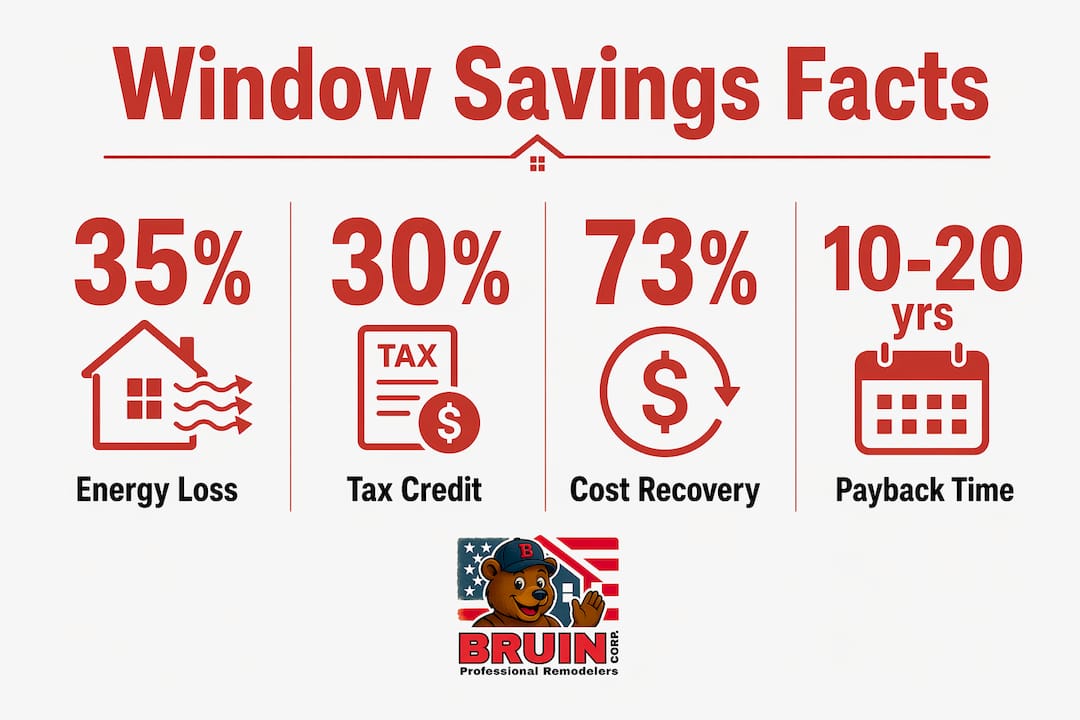
Replacing old single pane windows is the single most impactful step you can take to stop wasting money on heating and cooling every month. The U.S. Department of Energy reports that windows account for 25%–35% of a home’s total heating and cooling energy loss. That figure climbs to the upper end for aging single pane units with no insulating air gap, no Low-E coating, and frames that have warped or cracked over decades. Modern double pane and ENERGY STAR certified windows cut that loss dramatically, reduce noise, prevent condensation and mold, and add measurable resale value. This guide covers every reason to make the switch, from energy savings to comfort to dollars recovered at closing.
Why replace old single pane windows? the energy cost is real
Single pane glass has a U-factor of roughly 1.0, which means it transfers heat almost as freely as an open vent. A U-factor measures how quickly a window loses heat. The lower the number, the better the insulation. Standard double pane windows land around 0.30–0.50, and ENERGY STAR certified models push even lower.
The practical result is straightforward. Your furnace and air conditioner run longer to compensate for the heat bleeding through single pane glass. That extra runtime shows up directly on your utility bill every month, not just in winter. In summer, radiant heat pours through single pane glass and forces your air conditioner to work harder to keep rooms cool.

Old window replacement also addresses a less obvious problem: air infiltration. Aging frames made of wood or aluminum contract and expand with temperature swings. Over time, gaps open between the frame and the wall. Weatherstripping helps temporarily, but it does not fix a frame that has warped or rotted. Those gaps let conditioned air escape and outdoor air flood in, compounding the energy loss from the glass itself.
The energy efficiency benefits of upgrading go beyond just the glass. Modern frames made from vinyl or fiberglass are far better thermal barriers than aluminum, which conducts heat rapidly. Choosing the right frame material is as important as choosing the right glass package.
What condensation and mold tell you
Condensation on the interior surface of a single pane window is a warning sign, not just an annoyance. It means the glass surface is cold enough to drop below the dew point of your indoor air. Double pane windows keep the interior glass surface warmer, which eliminates this problem in most climates. Persistent condensation on single pane glass leads to mold growth on frames and sills, which damages wood, degrades air quality, and creates a repair bill on top of your energy bill.
Noise: the comfort benefit nobody talks about enough
Modern double and triple pane windows reduce street noise by 30+ decibels compared to single pane glass. That is the difference between hearing every passing car clearly and barely noticing traffic at all. The insulating air or gas gap between panes acts as a sound barrier. If you live near a busy road, a school, or an airport flight path, noise reduction alone often justifies the upgrade.
What is the financial return on window replacement?
The honest answer is that window replacement is not the fastest payback upgrade you can make. Energy-efficient windows generally deliver a slower dollar-per-year return than attic insulation or air sealing. Payback periods typically run 10–20 years depending on your climate, the number of windows replaced, and your current energy costs. That context matters when you are budgeting.
That said, the financial picture is broader than energy savings alone. Replacing single pane windows with ENERGY STAR certified models saves the average homeowner $250–$465 annually on utility bills. Over a 15-year period, that adds up to $3,750–$6,975 in cumulative savings before accounting for resale value.
Pro Tip: If your primary goal is energy savings per dollar spent, pair window replacement with attic insulation and air sealing. The combination delivers far greater total savings than windows alone, and many contractors bundle these upgrades at a discount.
Window replacement costs and resale value
| Window Type | Typical Project Cost | Annual Energy Savings | Resale Cost Recovery |
|---|---|---|---|
| Vinyl double pane | $7,500–$15,000 | $250–$465 | 60%–73% |
| Wood double pane | $12,000–$25,000 | $250–$465 | 60%–70% |
| Fiberglass double pane | $12,000–$25,000 | $250–$465 | 60%–73% |
| Triple pane (extreme climates) | $15,000–$30,000 | Up to 15% bill reduction | Varies by market |
Window replacement recovers 60%–73% of installation costs at resale, with vinyl frame projects generally yielding the highest percentages. That recovery rate reflects both the energy efficiency appeal and the curb appeal that new windows add. Buyers notice windows immediately. Rotted frames and foggy glass signal deferred maintenance and push offers down.
Federal tax credits and utility rebates can also reduce your net cost. The Inflation Reduction Act provides a 30% tax credit on qualifying ENERGY STAR window installations, up to $600 per year. Check with your utility provider as well, since many Massachusetts and Rhode Island utilities offer additional rebates on certified window upgrades.
Double pane vs. low-e vs. triple pane: which should you choose?
Not all replacement windows perform equally. Understanding the differences helps you match the right product to your climate and budget.
Double pane windows use two glass layers separated by a sealed gap filled with air or argon gas. Argon is denser than air and slows heat transfer more effectively. This design alone cuts heat loss dramatically compared to single pane glass and is the standard choice for most New England homes.
Low-E coatings are microscopically thin metallic layers applied to the glass surface. They reflect radiant heat back toward its source. In winter, Low-E glass reflects indoor heat back into the room. In summer, it blocks solar heat from entering. Low-E coatings improve window performance without adding visible tint, and they are standard on most ENERGY STAR certified products.
Triple pane windows add a third glass layer and a second insulating gap. They provide the highest insulation values available in a residential window, but they cost 20%–30% more than comparable double pane units. Triple pane makes the most sense in extreme cold climates or for homeowners who want the absolute lowest heating bills regardless of upfront cost.
Here is how the three technologies compare across the factors that matter most to homeowners:
| Feature | Single Pane | Double Pane (Low-E) | Triple Pane |
|---|---|---|---|
| U-factor (lower = better) | ~1.0 | 0.25–0.40 | 0.15–0.25 |
| Noise reduction | Minimal | Moderate (up to 30 dB) | High |
| Condensation resistance | Poor | Good | Excellent |
| Best climate fit | Mild only | Most U.S. climates | Extreme cold |
| Relative cost | Low | Moderate | High |
ENERGY STAR certified double pane windows with Low-E coatings represent the best value for the majority of Massachusetts and Rhode Island homeowners. They deliver the performance gains that matter most without the premium cost of triple pane glass.
Pairing new windows with cellular shades adds another layer of insulation at the glass surface and can further reduce heat loss during cold nights. It is a low-cost complement to a window upgrade, not a substitute.
What signs tell you it’s time to replace your windows?
Some window problems are worth repairing. Minor damage, such as a failed seal on a double pane unit or a small crack in a frame, can be fixed for $50–$200 per window. That repair cost is far lower than full replacement. But certain conditions make repair a waste of money.
Here are the situations that call for full replacement rather than a patch:
- Persistent drafts despite fresh weatherstripping. If you feel cold air near a window after replacing the weatherstripping, the frame itself has failed. No amount of caulk fixes a warped or rotted frame permanently.
- Difficulty opening or closing the window. Binding sashes signal warped frames or failed hardware. This is also a fire safety issue since windows serve as emergency exits.
- Visible rot, cracks, or warping in the frame. Rotted wood frames allow water infiltration into your wall cavity, which creates a far more expensive problem than window replacement.
- Condensation between the panes. On a double pane unit, fogging between the glass layers means the seal has failed and the insulating gas has escaped. The window is now performing like single pane glass.
- Mold on frames or sills that returns after cleaning. Recurring mold means moisture is consistently present, which points to a window that cannot maintain adequate surface temperatures.
- You are remodeling or re-siding your home. Window replacement is far less disruptive and less expensive when done alongside a siding project. Fixing windows before winter also prevents drafty spots from undermining any other comfort improvements you make.
Pro Tip: Walk through your home on a cold, windy day and hold your hand near each window frame. You will feel air movement at any gap the eye cannot see. This simple test identifies the worst offenders before you get quotes.
One option worth knowing about: storm windows installed over existing single pane units can deliver 60%–80% of the energy efficiency benefit of full replacement at 20%–30% of the cost. This is a legitimate choice for budget-constrained homeowners or those with historic homes where preserving original windows is a priority. Frame condition still needs evaluation before going this route.
Key takeaways
Replacing old single pane windows delivers energy savings, comfort improvements, noise reduction, and resale value gains that together justify the investment for most homeowners.
| Point | Details |
|---|---|
| Energy loss is significant | Single pane windows account for up to 35% of a home’s heating and cooling energy loss. |
| Annual savings add up | ENERGY STAR certified replacements save $250–$465 per year on utility bills. |
| Resale value is real | Window replacement recovers 60%–73% of project costs at resale, with vinyl frames leading. |
| Double pane with Low-E is the standard | This combination delivers the best performance-to-cost ratio for most U.S. climates. |
| Know when to replace vs. repair | Rotted frames, persistent drafts, and failed seals all indicate replacement over repair. |
Ready to replace your windows? bruin corp of attleboro can help
If you have been putting off window replacement because the process feels complicated, Bruin Corp of Attleboro makes it straightforward. With over 40 years of experience and more than 11,000 completed projects across Massachusetts and Rhode Island, the team knows exactly what New England homes need to stay comfortable and efficient year-round.

Bruin Corp of Attleboro offers window replacement services that cover everything from product selection to professional installation, with financing options that make the upgrade accessible without a large upfront payment. Whether you are replacing a handful of problem windows or upgrading every unit in the house, the focus is always on quality craftsmanship and lasting results. Get a free estimate and see why thousands of homeowners across the region trust Bruin Corp of Attleboro with their homes.
FAQ
How much heat do single pane windows lose?
Single pane windows are responsible for 25%–35% of a home’s total heating and cooling energy loss, according to the U.S. Department of Energy. Older single pane units with failing frames hit the upper end of that range.
How long does it take for new windows to pay for themselves?
The typical payback period for ENERGY STAR window replacement is 10–20 years through energy savings alone. Factoring in resale value recovery of 60%–73% of project costs shortens the effective payback considerably.
Are double pane windows worth it over single pane?
Double pane windows with Low-E coatings reduce heat loss, eliminate most condensation problems, and cut noise by up to 30 decibels compared to single pane glass. For nearly every U.S. climate, the upgrade to double pane is worth the cost.
Can i repair single pane windows instead of replacing them?
Minor repairs cost $50–$200 per window and make sense for isolated damage. Rotted frames, persistent drafts, and structural warping cannot be repaired cost-effectively. At that point, full replacement is the only option that solves the underlying problem.
Do new windows qualify for tax credits?
ENERGY STAR certified window installations qualify for a 30% federal tax credit under the Inflation Reduction Act, up to $600 per year. Many Massachusetts and Rhode Island utility companies also offer rebates on qualifying products, which reduces your net project cost further.