


Replacement windows reduce noise by using multiple glass layers, sealed air gaps, and airtight compression seals to interrupt sound waves before they reach your living space. The industry term for this performance is Sound Transmission Class, or STC, which measures how much sound a window blocks across a range of frequencies. Standard single-pane windows carry low STC ratings and let traffic, neighbors, and street noise pass through with almost no resistance. Upgrading to acoustic glazing addresses all three paths sound uses to enter: vibration through glass, pressure waves through air gaps, and leakage through frame seals. Understanding why replacement windows reduce noise starts with knowing exactly which features do the work.
What features of replacement windows make them effective at blocking noise?
Acoustic performance in a window comes from four physical elements working together: glass mass, lamination, air gap geometry, and frame seals. Remove any one of them and the system underperforms.
Glass mass and laminated acoustic glass
Heavier glass absorbs more sound energy before it passes through. Laminated acoustic glass adds a polyvinyl butyral, or PVB, interlayer between two panes. This interlayer dampens vibration rather than transmitting it, which is why acoustic glazing outperforms standard double-pane glass at the same thickness.

Asymmetric pane thickness
When two glass panes share the same thickness, they resonate at the same frequency. That resonance creates a weak spot where specific sound pitches pass through easily. Using panes of different thicknesses breaks that resonance and improves blocking across a wider range of frequencies. A 4mm pane paired with a 6mm pane, for example, performs better than two 5mm panes of equal total weight.
The air gap as a sound barrier
The sealed air gap between panes acts as a spring-mass system that disrupts sound wave transmission. The optimum air gap for residential acoustic performance is about 20mm. Gaps wider than 25mm can actually worsen sound insulation because they allow internal resonance to build up. This is a counterintuitive finding: bigger is not always better when it comes to air gap width.
Compression seals and frame materials
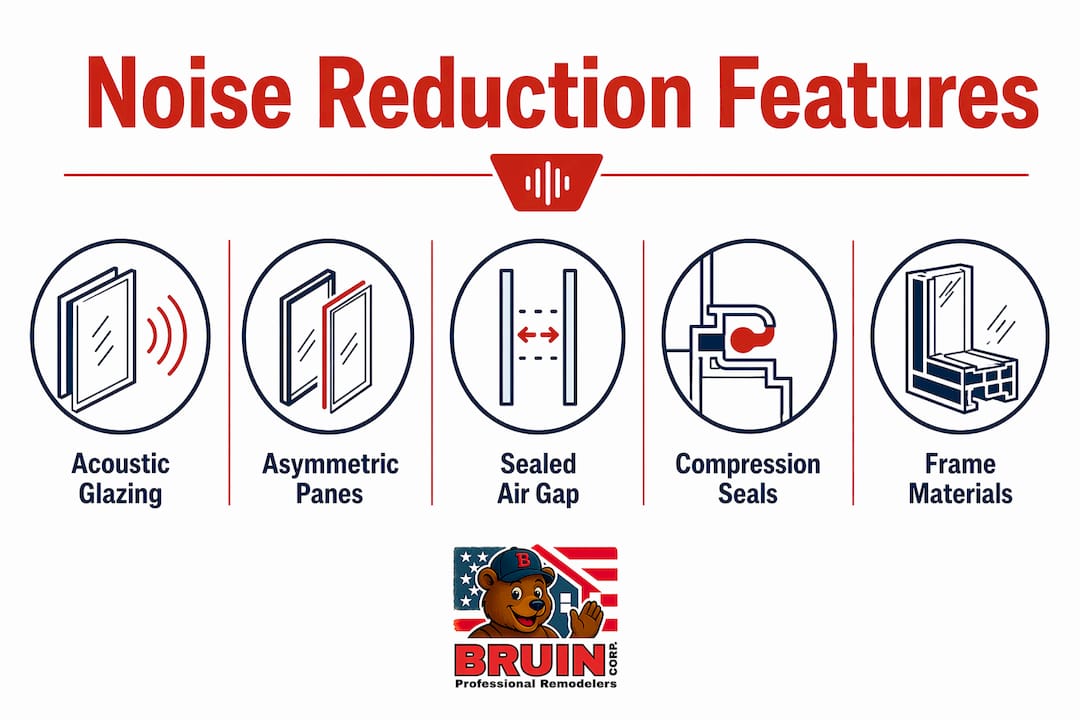
Sound travels as both pressure waves through air and vibration through solid materials. Addressing both paths is what separates a quiet window from a merely energy-efficient one. Compression seals at the frame perimeter close off air leakage paths. Vinyl and fiberglass frames transmit less vibration than aluminum, which is why they appear in most acoustic window specifications.
Pro Tip: Ask your installer specifically about asymmetric glazing. Many standard double-pane windows use identical pane thicknesses. Requesting mismatched panes costs little extra and delivers a measurable improvement in noise blocking.
How much noise reduction can homeowners expect?
The numbers here are worth knowing before you commit to a purchase. Replacing single-pane windows with high-quality double glazing can reduce noise transmission by up to 35 dB. That reduction roughly halves perceived loudness, which is a significant change in how your home feels day to day.
Urban traffic noise typically runs between 60 and 75 dB outside your window. With quality double glazing installed correctly, indoor levels drop to the 30–40 dB range. That is the difference between a busy street and a quiet library.
| Window type | Typical STC rating | Expected indoor noise level (from 70 dB outside) |
|---|---|---|
| Single-pane (original) | 18–27 | 43–52 dB indoors |
| Standard double-pane | 26–32 | 38–44 dB indoors |
| Acoustic double-pane | 34–38 | 32–36 dB indoors |
| Premium triple-pane | 38–42 | 28–32 dB indoors |
Standard double glazing and premium acoustic glazing are not the same product. Standard units prioritize energy efficiency. Acoustic units add the PVB interlayer, asymmetric glass, and wider compression seals. The acoustic version costs more, but the noise reduction gap between the two is substantial in practice.
On cost, professional installation of standard replacement windows averages $650–$1,300 per window. Triple-pane glass adds roughly $200–$400 per window on top of that. For homeowners on a tighter budget, the cost-to-benefit ratio of acoustic double-pane units is typically the strongest. You get most of the noise reduction at a fraction of the triple-pane premium. The benefits of replacement windows extend beyond noise, covering energy savings and comfort, which strengthens the overall value case.
Why is proper installation critical for noise reduction?
Glass technology alone does not deliver a quiet home. Installation quality determines whether the window performs at its rated STC or falls well short of it.
Sound follows the path of least resistance. A tiny gap between the window frame and the rough opening is all it takes to negate the acoustic improvements in the glass itself. Air gaps around the frame perimeter act like open channels that funnel outside noise directly into your home.
Here are the most common installation mistakes that reduce noise-blocking efficiency:
- Skipping backer rod before caulking. Backer rod fills deep gaps and gives sealant a proper base. Without it, sealant shrinks and cracks over time, reopening sound paths.
- Using standard silicone caulk. Standard silicone caulk is insufficient for long-term noise reduction. Professional acoustic sealants stay permanently flexible and maintain an airtight bond through seasonal expansion and contraction.
- Leaving gaps in the insulation around the frame. Spray foam or mineral wool fills the cavity between the window frame and the wall framing. Skipping this step leaves a direct sound path through the wall assembly.
- Improper shimming that creates frame flex. A window frame that flexes under wind pressure breaks its compression seal. Correct shimming holds the frame rigid so seals stay fully engaged.
Windows must be part of the complete building acoustic envelope. If your walls have poor insulation or your doors have large air gaps, even a perfectly installed acoustic window will not deliver the quiet you expect. Noise reduction is a whole-home system. Proper window installation best practices cover all of these details and protect your investment long term.
Pro Tip: After installation, run your hand slowly around the interior perimeter of the new window on a windy day. Any air movement you feel is a sound path. Have your installer seal it before they leave the job.
What alternatives or complements to window replacement can reduce noise?
Full window replacement is the most complete solution, but it is not the only one. Several alternatives deliver meaningful noise reduction at lower cost, and some work well alongside new windows.
-
Acoustic window inserts. These are secondary panels that mount inside your existing window frame without replacing the window itself. Interior acoustic inserts provide 60–80% of the acoustic benefits of full window replacement at 20–30% of the cost. They are a strong option for renters or homeowners who cannot yet budget for full replacement.
-
Secondary glazing. Secondary glazing adds a second pane on the interior side of an existing window, creating a wide air gap between the original glass and the new pane. Wider air gaps in secondary glazing systems improve low-frequency sound blocking, which is the rumble of trucks and bass from music. This approach works especially well in older homes with historic windows that cannot be replaced.
-
Acoustic caulk on existing windows. Sealing the perimeter of existing windows with acoustic caulk addresses the air leakage problem directly. This is the lowest-cost option and works best when the glass itself is already double-pane. Acoustic caulk will not help much if the glass is the primary weak point.
-
Weatherstripping replacement. Worn weatherstripping on operable windows creates gaps that let sound in. Replacing it with compression-style weatherstripping restores the airtight seal and costs very little. This is the first step any homeowner should take before investing in more expensive solutions.
-
Layered approach. Combining new acoustic windows with improved wall insulation and sealed door gaps produces results that no single upgrade can match. The overall building enclosure’s acoustic performance sets the ceiling on what any window upgrade can achieve. Addressing the full envelope is the path to a genuinely quiet home.
Key Takeaways
Replacement windows reduce noise most effectively when acoustic glazing, asymmetric pane thickness, optimum air gaps, and professional installation with acoustic sealants work together as a complete system.
| Point | Details |
|---|---|
| Acoustic glazing outperforms standard double-pane | Laminated glass with a PVB interlayer absorbs vibration that standard panes transmit. |
| Asymmetric pane thickness matters | Mismatched glass thicknesses prevent resonance and block a wider range of sound frequencies. |
| Air gap size has a sweet spot | An air gap of about 20mm delivers peak acoustic performance; wider gaps can reduce effectiveness. |
| Installation quality is non-negotiable | Acoustic sealants and proper framing prevent sound from bypassing the glass entirely. |
| Alternatives exist for tighter budgets | Acoustic inserts deliver 60–80% of full replacement benefits at 20–30% of the cost. |
Quieter windows start with the right installation partner
Choosing the right window product is only half the equation. The other half is having it installed by a team that understands acoustic performance from the frame out.

Bruin Corp of Attleboro has completed over 11,000 home exterior projects across Massachusetts and Rhode Island, with more than 40 years of family-owned experience behind every installation. Their window replacement services use products selected for both energy efficiency and noise reduction, and their crews apply acoustic sealants and proper framing techniques that protect your STC rating after the job is done. Financing options are available for homeowners who want to act without waiting. Visit Bruin Corp of Attleboro to request a consultation and find out which window solution fits your home and your noise situation.
FAQ
Do replacement windows actually block noise?
Yes. Quality replacement windows with acoustic glazing and airtight seals reduce noise transmission by up to 35 dB, which roughly halves perceived loudness compared to single-pane windows.
What type of window is best for noise reduction?
Acoustic double-pane or triple-pane windows with a PVB interlayer, asymmetric glass thicknesses, and compression seals deliver the strongest noise reduction. They carry higher STC ratings than standard energy-efficient double-pane units.
Does thicker glass alone block more noise?
Thicker glass adds mass and helps, but sealing and installation quality are equally critical. A thick pane installed with gaps around the frame will underperform a thinner pane installed with acoustic sealant and no air leaks.
How much do noise-reducing replacement windows cost?
Professional installation averages $650–$1,300 per window for standard replacement windows. Acoustic upgrades and triple-pane glass add $200–$400 per window. Acoustic inserts are a lower-cost alternative at $200–$500 per window.
Can I reduce window noise without replacing the windows?
Yes. Acoustic inserts, secondary glazing, and acoustic caulk all reduce noise without full replacement. Acoustic inserts provide 60–80% of the benefit of full replacement at a fraction of the cost, making them a practical first step.