


Wood frame windows require replacement primarily when structural rot, failed thermal seals, or chronic energy loss make repair a losing investment. Understanding why wood frame windows need replacement helps you act before moisture damage spreads to surrounding walls, trim, and framing. The decision is rarely about aesthetics alone. It comes down to structural integrity, energy performance, and the honest math of repair costs versus long-term savings. This guide covers how long wood windows actually last, the signs that repair is no longer viable, and how modern replacements deliver measurable improvements in comfort and protection.
Why wood frame windows need replacement: the core reasons
Wood windows fail for one primary reason: wood is organic, and organic materials decay when moisture and time combine. Structural rot and seal failure indicate a permanent loss of protection that repair cannot reliably reverse. Once the frame loses structural integrity, no amount of caulk or paint restores its ability to support glass, resist air infiltration, or protect the wall opening beneath it.
Energy performance is the second major driver. Windows account for 25 to 30% of residential heating and cooling energy use. That means a single-pane wood window from the 1980s is not just a comfort problem. It is a monthly expense that compounds across every heating and cooling season.
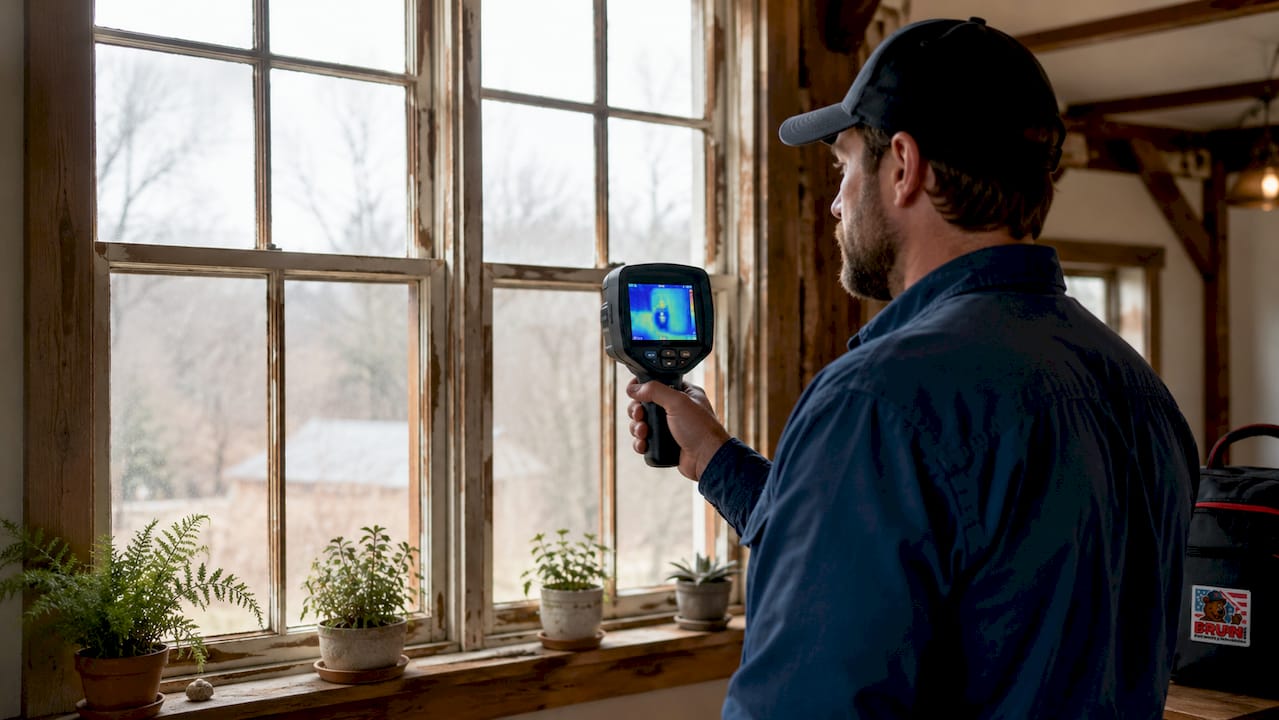
UV exposure accelerates the failure timeline in ways most homeowners underestimate. South and west-facing windows experience faster paint breakdown and underlying rot because they absorb the most direct sunlight. A window that looks fine from inside can be actively decaying on its exterior face.
How long do wood frame windows last?
The lifespan of a wood window depends almost entirely on species and maintenance discipline. Softwood windows last 15 to 30 years, engineered softwood reaches 30 to 40 years, and hardwood species like oak or mahogany can last 40 to 60 years or more. These ranges assume consistent upkeep. Without it, any wood window can fail in under a decade.
The maintenance requirement is not trivial. Standard softwood frames need repainting or resealing every 3 to 5 years. Hardwoods extend that interval to 8 to 15 years, but the work still needs to happen on schedule. Historic wood windows have survived over a century in well-maintained homes, which proves longevity is possible. It also proves it is labor-intensive.
| Wood type | Typical lifespan | Maintenance interval |
|---|---|---|
| Softwood (pine, fir) | 15 to 30 years | Every 3 to 5 years |
| Engineered softwood | 30 to 40 years | Every 5 to 7 years |
| Hardwood (oak, mahogany) | 40 to 60+ years | Every 8 to 15 years |
Climate matters as much as species. Homes in Massachusetts and Rhode Island face freeze-thaw cycles, high humidity, and nor’easters that stress wood joints and paint finishes far harder than dry climates do. A softwood window installed in coastal New England without rigorous maintenance will reach the bottom of its lifespan range, not the top.
Pro Tip: Check your south and west-facing windows first each spring. Those frames absorb the most UV and moisture stress and will show early rot before any other window in the house.
What are the signs wood windows need replacement?
The difference between a window that needs repair and one that needs replacement comes down to where the damage is. Surface issues like peeling paint or a sticky sash are repair territory. Structural and thermal failures are not.
The clearest signs that replacement is the right call include:
- Soft or spongy wood anywhere on the frame or sill. Rotted structural frames cannot be patched back to load-bearing condition. The decay will continue spreading even after surface treatment.
- Fogging or condensation between panes. This means the thermal seal has failed. The insulating gas between the panes has escaped, and the window is now performing at single-pane efficiency regardless of what it looks like from outside.
- Frames painted shut or warped beyond operation. A window that cannot open is a fire egress failure and a ventilation problem. Warping this severe signals that the frame has absorbed moisture through its full depth.
- Persistent drafts or cold spots near the frame even after weather-stripping replacement. This points to air infiltration through the frame itself, not just the hardware.
- Visible gaps between the frame and the rough opening. Settlement and wood shrinkage create pathways for water and air that no sealant permanently closes.
You can learn more about identifying replacement timing before minor issues become structural ones. The key distinction is this: cosmetic aging is normal and manageable. Structural rot, failed seals, and compromised operation are not cosmetic. They are functional failures that compound over time.
Pro Tip: Press a screwdriver gently into the wood at the bottom corners of each frame. If it sinks more than a quarter inch without resistance, the wood is rotted through and repair is not a viable long-term fix.
What benefits do modern replacement windows offer?
Modern replacement windows address every weakness that makes aging wood windows a liability. The performance gap between a 30-year-old single-pane wood window and a current double or triple-pane unit with low-E glass is not incremental. It is categorical.
Double and triple glazing with low-E coatings reduce heat transfer and air leakage far beyond what any restored original window can achieve. Low-E glass reflects infrared heat back into the room in winter and blocks solar heat gain in summer. The result is a measurable reduction in heating and cooling demand, which directly lowers utility bills. For a deeper look at the full range of energy efficiency gains, the performance improvements go well beyond temperature comfort.
Wood-clad windows offer a specific advantage for homeowners who want to preserve the warm, natural look of wood on the interior without accepting the exterior maintenance burden. Aluminum and fiberglass cladding on the exterior face shields the wood from moisture and UV damage while requiring no painting or sealing. The interior retains the grain and warmth of real wood. This is the option that resolves the core tension between aesthetics and practicality.
The financial case for replacement is also stronger than many homeowners expect. Reduced energy bills, lower maintenance costs, and improved home value all contribute to the return. Pairing new windows with upgraded home insulation amplifies the energy savings further, since air sealing at the window opening and wall insulation work together as a system.
Proper installation quality is as critical as the window product itself. Correct flashing, sealing, and structural support determine whether a new window performs at its rated specification or begins failing prematurely. This is why professional installation from an experienced contractor is not optional. It is the factor that determines whether the investment holds its value.
How to decide between repair, wood-clad, or full replacement
The decision framework starts with one question: is the frame structurally sound? Everything else follows from that answer.
- Assess structural integrity first. Press, probe, and inspect every frame for soft wood, visible rot, and separation from the rough opening. If the frame is solid, repair is a legitimate option. If it is not, repair is a temporary fix on a failing foundation.
- Count how many windows are affected. One window with a failed seal is a repair or single-unit replacement. Five windows with warped frames, failed seals, and drafts is a whole-house replacement project. Replacement becomes cost-effective when multiple windows fail simultaneously or when energy efficiency is permanently compromised across the home.
- Evaluate your maintenance tolerance honestly. If you have not kept up with the 3 to 5 year repainting cycle, the next 20 years will not be different. Wood windows reward disciplined maintenance and punish neglect. If the maintenance burden is the real problem, wood-clad or vinyl replacement windows solve it structurally rather than cosmetically.
- Consider wood-clad as the middle path. Wood-clad windows preserve the interior character of a wood window while eliminating exterior maintenance. They are the right choice when the aesthetic of real wood matters but the upkeep does not fit your schedule or budget.
- Get a professional inspection before committing. Professional evaluation of frame condition, thermal performance, and installation quality gives you an accurate picture of what you are actually dealing with. Self-assessment misses hidden rot behind trim and inside wall cavities.
The cost of replacing wood windows varies by unit size, glass specification, and installation complexity. But the more useful comparison is the cost of replacement against the ongoing cost of repair, energy loss, and potential water damage to surrounding structure. When you run that math over a 10-year horizon, replacement wins in most cases where structural damage is present. You can explore the full reasoning behind why replacement makes sense for most homeowners dealing with aging wood windows.
Pro Tip: Ask any contractor for a written assessment that separates cosmetic issues from structural ones. If they cannot make that distinction clearly, find someone who can.
Key takeaways
Wood frame windows need replacement when structural rot, failed thermal seals, or chronic energy loss make repair a short-term fix rather than a long-term solution.
| Point | Details |
|---|---|
| Lifespan depends on species and upkeep | Softwood lasts 15 to 30 years; hardwood reaches 40 to 60 years with consistent maintenance. |
| Structural rot means replacement, not repair | Soft or spongy wood in the frame cannot be patched back to structural integrity. |
| Failed seals kill energy performance | Fogged panes signal insulating gas loss, reducing the window to single-pane efficiency. |
| Wood-clad windows solve the maintenance problem | Exterior cladding in aluminum or fiberglass eliminates repainting while preserving wood interiors. |
| Installation quality determines long-term value | Proper flashing and sealing at installation are as important as the window product itself. |
Ready to replace your wood frame windows? Bruin Corp of Attleboro can help
Bruin Corp of Attleboro has completed over 11,000 projects across Massachusetts and Rhode Island, with more than 40 years of experience in energy-efficient window replacement and installation. Their team assesses frame condition, recommends the right replacement option for your home, and installs to manufacturer specification so your investment performs as rated.

Whether you need a single rotted frame replaced or a whole-house upgrade to double-pane or wood-clad windows, Bruin Corp of Attleboro offers financing options and a track record that backs every project. Visit Bruin Corp of Attleboro to schedule a consultation and get a clear picture of what your windows actually need.
FAQ
How long do wood frame windows typically last?
Softwood windows last 15 to 30 years, while hardwood frames can reach 40 to 60 years or more with consistent repainting and sealing on schedule. Without regular maintenance, any wood window can fail well before those upper limits.
What is the clearest sign a wood window needs replacement rather than repair?
Soft or spongy wood in the frame corners or sill is the clearest indicator. Rotted structural wood cannot be restored to load-bearing condition through patching, and the decay will continue spreading if the frame stays in place.
Are wood-clad windows worth the cost over standard wood?
Wood-clad windows cost more upfront but eliminate the exterior repainting cycle that standard wood requires every 3 to 5 years. Aluminum and fiberglass cladding protects the wood core from moisture and UV damage while preserving the natural interior appearance homeowners want.
Do new windows actually lower energy bills?
Yes. Windows drive 25 to 30% of residential heating and cooling energy use, and replacing single-pane or failed-seal wood windows with double or triple-pane low-E units directly reduces that loss. The savings compound across every heating and cooling season.
Is it ever worth repairing wood windows instead of replacing them?
Repair makes sense when the frame is structurally sound and only one or two units show cosmetic or minor operational issues. Replacement is more cost-effective when multiple windows fail simultaneously, frames are warped or rotted, or energy efficiency is permanently compromised across the home.