


Window replacement is defined as removing an existing window unit and installing a new one built to current performance standards. The two main methods are insert (pocket) replacement, which keeps the existing frame, and full-frame replacement, which removes the entire window assembly including the frame and trim. Knowing what is window replacement and which method fits your home is the first decision that shapes your cost, timeline, and energy results. This guide covers both types, the full installation process, energy efficiency factors, and how to tell when repair is no longer enough.
What is window replacement: insert vs. full-frame options?
Window replacement involves two distinct approaches, and choosing the wrong one wastes money or leaves underlying problems unresolved. Insert replacement slides a new window unit into the existing frame without disturbing the surrounding trim or siding. Full-frame replacement removes everything down to the rough opening, including the frame, sill, and exterior trim, then installs a completely new window assembly.
The right choice depends on the condition of your existing frame. Insert replacement works only when the frame is structurally sound, square, and free from rot or moisture damage. If the frame is damaged, warped, or you want to resize the opening, full-frame replacement is the required path.
How do insert and full-frame replacements compare?
The differences between these two methods show up in cost, time, and disruption.
| Factor | Insert replacement | Full-frame replacement |
|---|---|---|
| Cost per window | $300–$700 | $600–$1,500+ |
| Installation time | 30–60 minutes | 2–3 hours |
| Frame condition needed | Sound, square, rot-free | Any condition |
| Exterior disruption | Minimal | Siding and trim removed |
| Best for | Cosmetic upgrade, tight budget | Damaged frames, resizing |
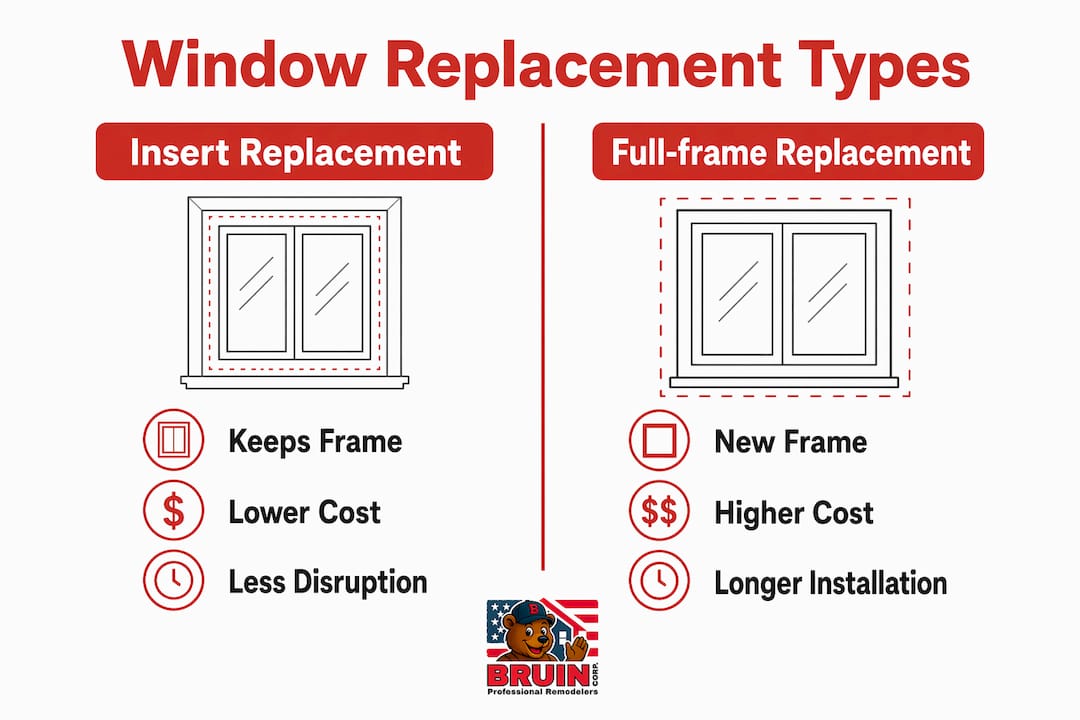
Installed price ranges for insert replacements run about $300–$700 per window, while full-frame replacements typically cost $600–$1,500 or more. That gap reflects the added labor, materials, and time required to rebuild the opening from scratch.
A detail most homeowners miss: insert replacement is viable only if the diagonal squareness tolerance of the existing frame is within approximately 1/4 inch. A frame that is out of square beyond that threshold will cause drafts and poor window operation even with a brand-new unit inside it.
- Insert replacement preserves interior and exterior trim, reducing mess and labor.
- Full-frame replacement gives installers access to inspect and repair the rough opening, flashing, and insulation.
- Full-frame is the better long-term investment when frames show any sign of rot, water damage, or significant air leakage.
- Replacement window styles vary widely, and the method you choose affects which styles are available to you.
Pro Tip: Before committing to insert replacement, ask your installer to check the frame diagonals. A 1/4-inch squareness tolerance is the industry threshold. Anything beyond that calls for full-frame work.
What does the window replacement process involve?
A typical window replacement project spans 3–6 weeks from initial consultation to finished installation. The in-home installation itself usually takes 1–2 days for most homes. Here is what each stage looks like.
- Consultation and measurement. A professional measures each opening precisely. Even a small measurement error causes gaps, air leakage, or a unit that will not operate correctly.
- Home preparation. Furniture near windows is moved, and drop cloths protect floors and surfaces. Exterior access is set up where needed.
- Old window removal. Installers cut caulk, pry trim, and carefully remove the existing unit. Debris is vacuumed from the opening before any inspection begins.
- Rough opening inspection. This is the most critical step. Installers check for rot, moisture damage, insulation gaps, and squareness. Problems found here determine whether the project stays as planned or requires additional repairs.
- Dry-fitting the new window. The new unit is placed in the opening without fasteners to confirm fit and alignment before any permanent work begins.
- Sealing and flashing. Sill pans and layered flashing are installed to direct water outward and downward. ASTM E2112 outlines the flashing layers required to protect the rough opening from water intrusion. Skipping this step increases the risk of rot and mold behind your walls.
- Fastening, insulating, and trimming. The window is shimmed, fastened, and insulated around the perimeter. Interior and exterior trim is reinstalled or replaced.
- Final walkthrough. The installer tests operation, checks seals, and walks you through the finished work.
Pro Tip: Ask your installer to show you the rough opening before the new window goes in. That moment reveals the true condition of your wall assembly and confirms whether the right replacement method was chosen.
Good window installation practices at every one of these steps determine how long your new windows perform and how well they protect your home.
How does window replacement improve energy efficiency?
Energy efficiency in replacement windows depends on two things: the window unit itself and the quality of its installation. Most homeowners focus on glass ratings and miss the second half of that equation entirely.
High-rated window glass does not guarantee energy savings if perimeter air sealing and flashing are insufficient. Poor sealing causes drafts and reduces expected energy savings despite high-performance glass. Installation quality is often the deciding factor between a window that cuts your heating bill and one that underperforms for years.
Modern replacement windows deliver energy efficiency through several features:
- Double or triple glazing traps insulating air or gas between panes to reduce heat transfer.
- Low-E coatings reflect infrared heat while allowing visible light through, keeping homes cooler in summer and warmer in winter.
- Argon or krypton gas fills between panes outperform air as insulators.
- Warm-edge spacers reduce condensation at the glass edge, which is a common sign of heat loss.
Replacing old, leaky single-pane windows with properly installed modern units reduces drafts, lowers heating and cooling bills, and noticeably improves home quietness. The energy-efficient window benefits extend beyond comfort to measurable reductions in monthly utility costs.
The rough opening seal matters as much as the glass. Proper sill pan flashing, layered according to ASTM E2112 principles, directs any water that gets past the exterior seal outward and away from your wall structure. Without it, even the best window unit sits in a compromised opening.
Do you need window replacement or just a repair?
Repair makes sense for minor issues. Replacement is the right call when the window’s core function is compromised. Knowing the difference saves money and prevents you from patching a problem that will return.
Replace your windows when you see these signs:
- Visible rot, warping, or structural damage to the frame or sill
- Fogging or condensation between double-pane glass (seal failure)
- Drafts you can feel even with the window fully closed
- Hardware that no longer latches, locks, or operates correctly
- Single-pane glass with no insulating value
- Water stains on the interior wall below the window
Signs that old windows need replacing go beyond cosmetics. A window that looks aged but seals well and operates correctly may only need weatherstripping or a hardware fix. A window with seal failure, rot, or persistent drafts will not perform better with a patch.
Age also matters in a practical way. Windows installed before the widespread adoption of low-E coatings and gas fills simply cannot match the thermal performance of current units. Replacing old single-pane windows is one of the highest-return upgrades available to homeowners with older homes.
Pro Tip: Run your hand along the interior edge of each window on a cold day. Consistent cold air movement means the seal or flashing has failed. That window is costing you money every month it stays in place.
The benefits of window replacement over repair include lower maintenance, better curb appeal, improved security from modern locking hardware, and energy savings that compound over years. Repair delays the inevitable when the underlying structure is compromised.
Bruin Corp of Attleboro: window replacement done right
Bruin Corp of Attleboro has completed over 11,000 home exterior projects across Massachusetts and Rhode Island, with more than 40 years of experience in energy-efficient window replacement.

Bruin Corp of Attleboro handles both insert and full-frame replacements, with expert assessment of your rough opening condition before any work begins. Every installation follows proper flashing, air sealing, and insulation standards so your new windows perform as rated. Financing options are available, and the team walks you through every step from measurement to final walkthrough. Contact Bruin Corp of Attleboro for a consultation and quote on replacement windows that will lower your energy bills and protect your home for decades.
Key takeaways
Window replacement requires choosing the right method, frame condition, and installation quality to deliver lasting energy savings and home comfort.
| Point | Details |
|---|---|
| Two replacement methods | Insert keeps the existing frame; full-frame replaces the entire window assembly including frame and trim. |
| Cost ranges vary significantly | Insert replacements cost $300–$700 per window; full-frame replacements run $600–$1,500 or more. |
| Installation quality drives efficiency | Proper air sealing and flashing matter as much as glass ratings for real energy savings. |
| Frame condition is the deciding factor | Damaged, rotted, or out-of-square frames require full-frame replacement, not insert work. |
| Repair vs. replace has clear signals | Seal failure, rot, persistent drafts, and single-pane glass all call for replacement, not repair. |
FAQ
What is the difference between insert and full-frame window replacement?
Insert replacement slides a new window into the existing frame without removing trim or siding. Full-frame replacement removes the entire window assembly down to the rough opening, including the frame, sill, and exterior trim.
How long does window replacement take?
Basic insert installation takes about 30–60 minutes per window. Full-frame replacements take 2–3 hours per window. Most homes complete the full project in 1–2 days of in-home installation.
How much does window replacement cost?
Insert replacements typically cost $300–$700 per window installed. Full-frame replacements run $600–$1,500 or more, depending on window size, type, labor, and any repairs needed to the rough opening.
Does window replacement actually save energy?
Yes, but only when installation is done correctly. Proper perimeter sealing and flashing are as important as the glass specifications. A high-performance window installed with poor air sealing will still allow drafts and heat loss.
Can I replace windows myself?
Insert replacement can be a reasonable DIY project if the existing frame is sound and square. Full-frame replacement generally requires a contractor because of the complexity of flashing, air sealing, and structural work involved in rebuilding the rough opening correctly.